What Your Office Restroom Says About Your Business: A Boston Commercial Restroom Cleaning Guide
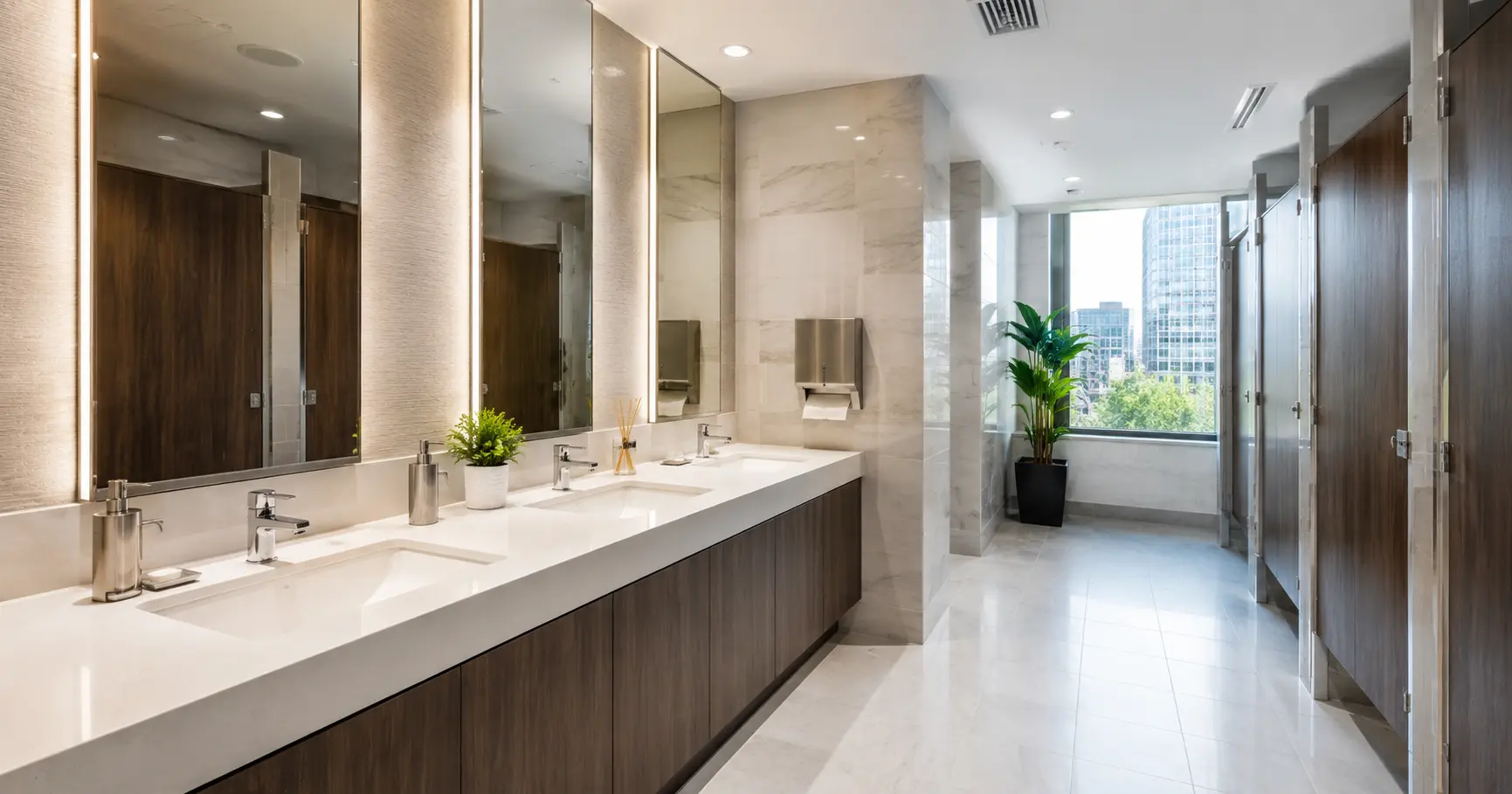
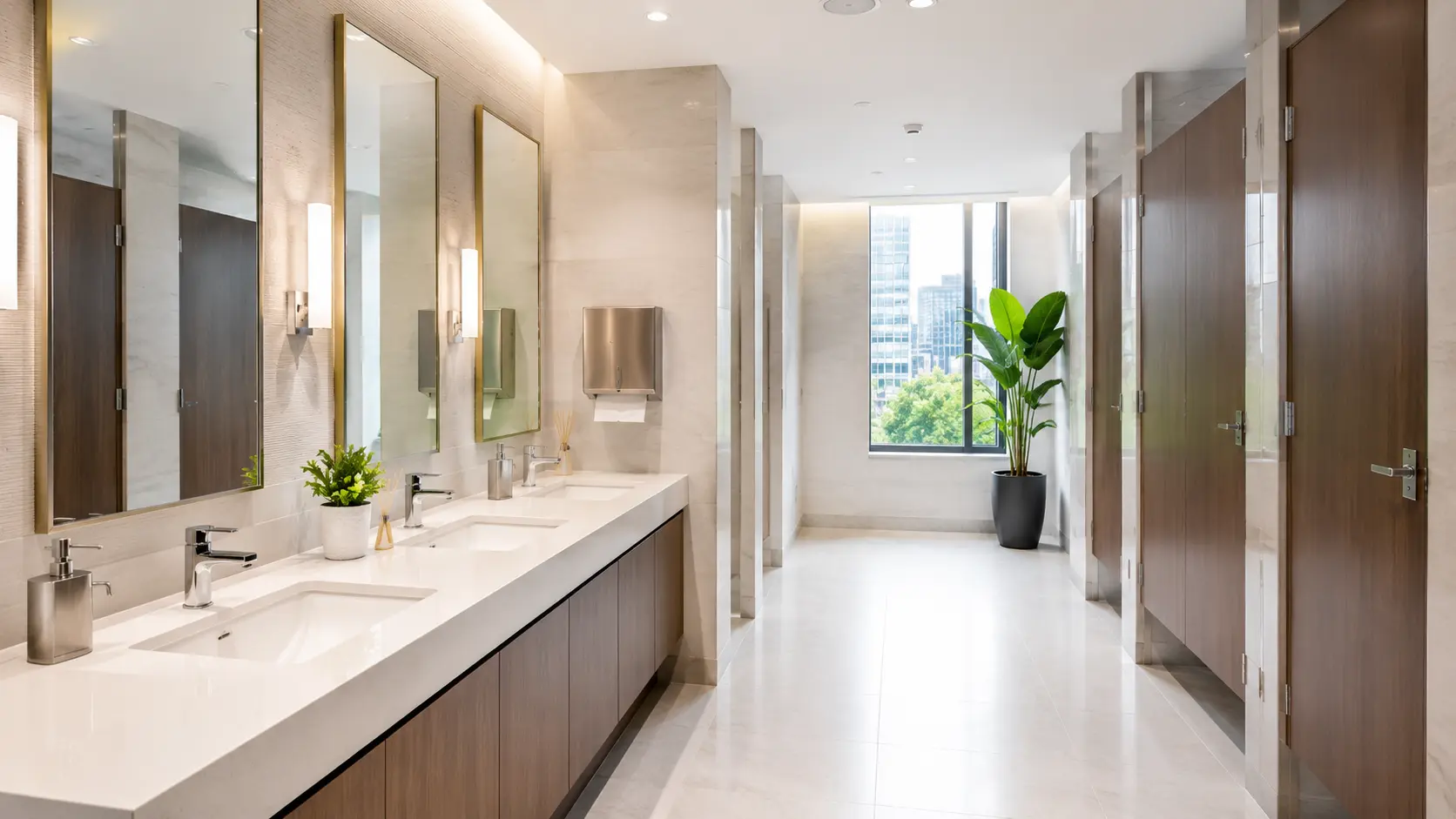
You can spend a fortune on your lobby, your branding, and your conference room—and lose a client in the thirty seconds they spend in your restroom. The restroom is the one room in your building every visitor and every employee uses, up close and alone, with nothing to distract them from the details. A streaked mirror, an empty soap dispenser, a lingering odor, or a sticky floor sends a louder message about how you run your business than any brochure ever could. This guide breaks down exactly what your office restroom is telling people—and the commercial restroom cleaning strategy that keeps that message a positive one for businesses across the Greater Boston Area.
This is not a matter of opinion. National surveys of consumers and employees consistently find that a dirty restroom is read as a sign of poor management—and that a meaningful share of people will not return to a business after a bad restroom experience. Restroom condition shapes whether a prospect trusts you, whether an employee feels valued, and even whether a building tenant signs a lease. Whether you manage an office in Boston, Cambridge, Brookline, or Quincy, the restroom is where your standards are tested in public.
In this guide we cover why the restroom carries so much weight, the real costs of getting it wrong, the germ hotspots that need daily attention, complete daily and deep-cleaning checklists, odor control that actually works, smart stocking, and how often a commercial restroom truly needs to be cleaned. Each section is built to be acted on right away, with guidance on when to bring in professional commercial cleaning services to hold the standard consistently.
1. Why the Restroom Is the Most Honest Room in Your Office
Every other room in your office is curated. You arrange the lobby, stage the conference room, and tidy desks before a client visit. The restroom is different—it is used constantly, by everyone, and it reveals your real day-to-day standards rather than your best-behavior version. People instinctively understand this, which is why a clean restroom builds trust and a dirty one quietly erases it. The logic visitors apply is simple and unforgiving: if they let the restroom get like this, what does the kitchen they prepare in, the warehouse they ship from, or the work they do for me look like?
For employees, the restroom is a daily signal about whether the company respects them. A workplace that keeps its restrooms clean, stocked, and fresh communicates care; one that does not breeds quiet resentment and the sense that corners are cut everywhere. That perception follows people back to their desks and into how they talk about their employer. In commercial real estate, the effect is even more concrete: a prospective tenant or buyer touring a building forms a fast judgment in the restroom, and a poor one can cost a lease. The restroom is small, but the decisions made there are not.
2. The Real Business Cost of a Dirty Restroom
A neglected restroom is not a cosmetic problem—it is a financial one. The costs are easy to overlook because they rarely show up on a single invoice, but they accumulate across lost clients, lower morale, more sick days, and reputational damage that spreads through reviews and word of mouth. Understanding where the money actually leaks makes the case for proper restroom cleaning obvious.
- Lost clients and deals: A prospect who is unimpressed by your restroom rarely tells you—they simply do not come back. Each one represents revenue that quietly disappears.
- Lower employee morale and retention: Poor restroom conditions are a recurring complaint that erodes how people feel about their workplace, and a clean, well-kept office is consistently linked to higher satisfaction and productivity.
- More sick days: Restrooms are a primary transmission point for illness. When high-touch surfaces are not disinfected, germs move from the restroom to every desk in the building.
- Reputation and reviews: Customers now broadcast restroom complaints in online reviews, where a single “the bathroom was disgusting” can outweigh a dozen positive comments.
- Compliance exposure: Employers are legally required to provide clean, sanitary restroom facilities under federal workplace standards.
That last point is worth emphasizing. The OSHA Sanitation standard (29 CFR 1910.141) requires employers to keep toilet facilities clean and sanitary. Beyond the legal floor, the connection between cleanliness and business performance is well documented—see our deeper look at the science behind commercial cleaning's health and productivity benefits.
The 30-Second Test
Walk into your office restroom right now as if you were a first-time client. Look at the mirror, the sink, the floor near the toilet, the soap dispenser, and the trash. Take a breath through your nose. If anything you notice would make you hesitate, your visitors are noticing it too—and forming an opinion about your entire business in the same thirty seconds.
3. Restroom Germ Hotspots: Where Bacteria Actually Hide
A restroom can look clean and still be a germ reservoir. Visual tidiness and true sanitation are two different things—a surface can shine and still carry bacteria and viruses that spread illness through your office. The danger lives on high-touch points that get handled dozens or hundreds of times a day, often right after someone has used the facilities and before they have washed their hands. These are the surfaces that matter most, and they are exactly where rushed cleaning falls short.
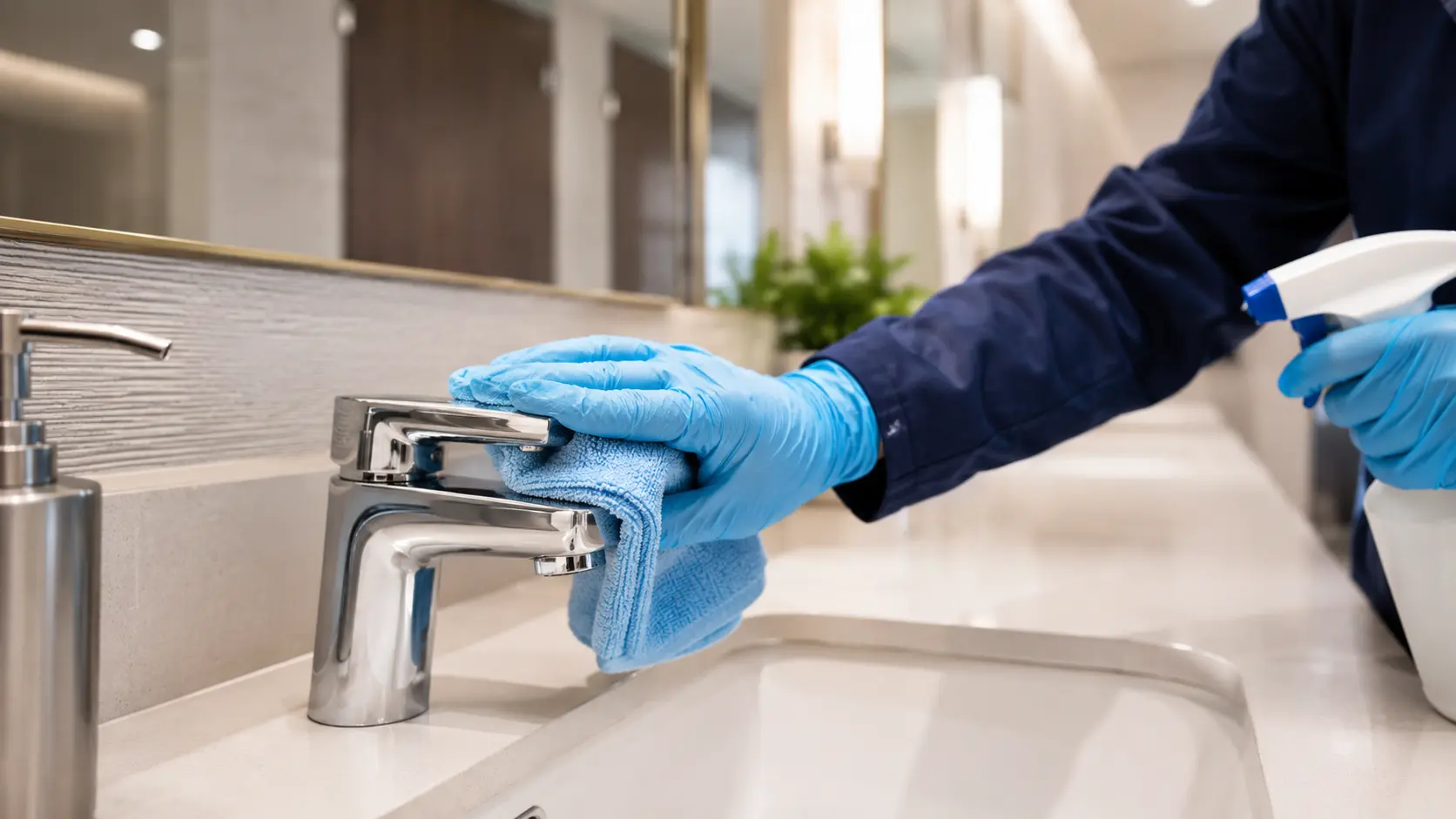
The High-Touch Surfaces That Need Daily Disinfection:
- Door handles and push plates—the first and last thing every hand touches
- Faucet handles and soap dispenser levers—touched with unwashed hands, every single time
- Stall latches and partition edges—handled by everyone, cleaned by almost no one
- Flush handles and toilet seats—obvious, yet often missed in a quick wipe-down
- Paper towel and toilet paper dispenser levers—high contact, low attention
- Light switches and entry door pulls—the silent germ-transfer points on the way out
- Sink basins, counters, and the splash zone around them—constantly wet, constantly contaminated
The right approach is to clean first, then disinfect. Cleaning removes the visible soil and residue; disinfecting kills the germs that remain—and a disinfectant can only work on a surface that has already been cleaned. Use EPA-registered disinfectants and respect the product's listed dwell time—the surface must stay visibly wet for the full contact period stated on the label, or the germs are not actually killed. Color-coded cloths (one color reserved for restrooms only) prevent cross-contamination between the restroom and the rest of the office. Pairing reliable restroom hygiene with handwashing is one of the most effective things any workplace can do to cut illness; the CDC identifies hand hygiene as a frontline defense against the spread of respiratory and gastrointestinal illness.
4. The Daily Commercial Restroom Cleaning Checklist
Consistency is what separates a restroom people trust from one they avoid. A thorough daily routine—performed at least once and, in busier offices, multiple times per day—keeps germs, odors, and grime from ever getting a foothold. This is the non-negotiable baseline for any commercial restroom, and it should be the same every day regardless of who is doing the work.
Daily Restroom Cleaning Checklist:
- Clean and disinfect all toilets, urinals, and seats, inside and out
- Disinfect every high-touch point: handles, latches, flush levers, faucets, and dispensers
- Clean and shine sinks, counters, and the surrounding splash zone
- Polish mirrors and stainless fixtures streak-free
- Sweep and wet-mop floors with a dedicated restroom mop, paying attention to corners and the base of toilets
- Empty all trash and sanitary bins and replace liners
- Restock soap, paper towels, toilet paper, and seat covers before they run low
- Confirm the exhaust fan is running and the room smells fresh, not masked
- Spot-clean walls, partitions, and doors for splashes and fingerprints
- Do a final visual pass—the way a client would see it—before signing off
For offices with steady foot traffic, this routine needs to happen as part of a structured daily program rather than “whenever someone gets to it.” Our daily office cleaning services build restroom disinfection into a consistent schedule, so the space is held to the same standard every single day—not just before an important visit.
5. Weekly and Deep-Cleaning Restroom Tasks
Daily cleaning keeps the surface fresh; deep cleaning protects the room from the problems that build up underneath. Grime in grout, mineral scale on fixtures, and buildup in drains develop slowly and are the usual source of stubborn odors and that “never quite clean” feeling no amount of daily wiping fixes. A weekly and periodic deep-clean routine resets the room to a genuinely clean baseline and extends the life of your fixtures and finishes.
Weekly & Periodic Deep-Cleaning Checklist:
- Deep scrub tile grout and floor edges where soil and odor collect
- Descale faucets, flush valves, and toilet bowls to remove hard-water mineral buildup
- Treat and deodorize floor drains, the most common source of mystery odors
- Detail-clean partitions, walls, and the backs of doors top to bottom
- Clean and polish all chrome, stainless, and metal fixtures
- Wash trash and sanitary bins, not just the liners inside them
- Dust vents, exhaust covers, light fixtures, and the tops of partitions and stalls
- Inspect caulking and seals around sinks and toilets for mold and gaps
- Check for leaks, running toilets, and loose fixtures that invite moisture and odor
These deeper tasks are easy to defer—and that is exactly why they get neglected until the room develops a problem you can smell from the hallway. A consistent weekly janitorial program keeps grout, drains, and fixtures from reaching that point, and a periodic one-time deep cleaning is the fastest way to reset a restroom that has fallen behind.
6. Odor Control: Treat the Source, Not the Symptom
Odor is the single fastest way a restroom betrays poor cleaning—and air freshener is the single most common mistake. Spraying fragrance over a bad smell does not remove it; it layers a second scent on top, creating that distinctive “perfumed problem” aroma everyone recognizes and no one trusts. Persistent restroom odor almost always traces back to a physical source, and the only real fix is to find it and clean it.
The usual culprits are predictable: uric-acid buildup around and under toilets and urinals, organic matter trapped in grout and floor edges, dry or dirty floor drains releasing sewer gas, overflowing or unwashed trash bins, and poor ventilation that lets humidity and smells linger. Work through those sources methodically and the odor disappears for good—no fragrance required. Proper ventilation does the rest, carrying moisture and trace odors out instead of letting them settle into every surface.
Odor Control Checklist:
- Deep clean grout and the floor around toilets and urinals, where uric acid concentrates
- Keep floor drains clean and topped with water so the trap blocks sewer gas
- Empty and wash trash and sanitary bins frequently—not just the liners
- Confirm the exhaust fan actually moves air and runs long enough to clear humidity
- Use enzyme-based cleaners that digest organic residue rather than masking it
- Address leaks and damp spots fast—moisture feeds both odor and mold
- Skip heavy air fresheners; aim for a restroom that smells like nothing at all
Pro Tip: A Clean Restroom Smells Like Nothing
The goal is not a restroom that smells like flowers or citrus—it is a restroom that has no smell at all. Neutral air is the unmistakable signal of a space that is genuinely clean at the source. If you find yourself reaching for stronger fragrance, treat it as a diagnostic: something physical needs cleaning, and the smell is pointing you straight to it.
7. Supplies and Stocking: The Details Clients Notice
Nothing undermines an otherwise spotless restroom faster than an empty soap dispenser. Stocking is where cleaning meets hospitality, and the small failures are the ones people remember: no paper towels, a toilet-paper roll down to its last few squares, a soap dispenser that sputters air. These moments leave a visitor stranded at the exact instant they are most aware of hygiene—and they read instantly as neglect, no matter how clean the surfaces are.
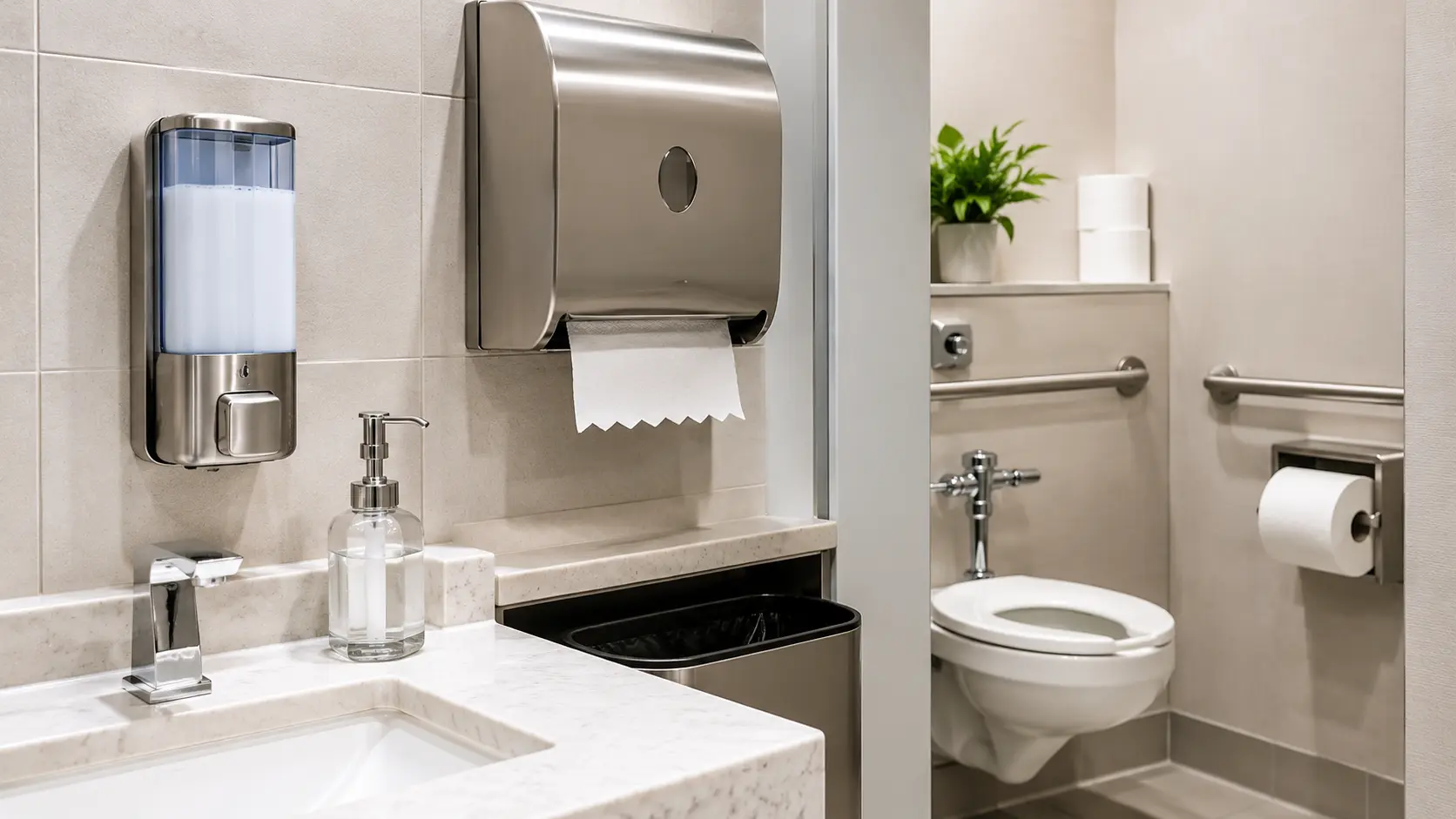
Smart Stocking Checklist:
- Check and refill soap, paper towels, toilet paper, and seat covers at every cleaning
- Keep dispensers filled well before they hit empty—never let supplies run to zero
- Maintain a stocked backup supply on-site so refills are immediate, not next-day
- Provide hand sanitizer as a visible backup near the door
- Use reliable, well-maintained dispensers; a jammed dispenser reads the same as an empty one
- Track usage in high-traffic restrooms so busy days never catch you short
- Keep sanitary disposal units stocked, serviced, and discreet
In a busy office, stocking is not a once-a-day task—it is a function of traffic. The restroom by a 40-person open floor needs more frequent checks than one serving a quiet executive suite. A professional cleaning program plans stocking around your actual usage so the dispensers are never the thing a client remembers.
8. How Often Should an Office Restroom Be Cleaned?
The honest answer is: more often than most offices think. Restroom cleaning frequency should track foot traffic, not a fixed habit. A small office where a dozen people share one restroom has very different needs from a busy floor where that same restroom serves a hundred people and a stream of visitors. The guiding principle is simple—the restroom should always look and feel as though it was just cleaned, because to the next person walking in, it is the only impression that exists.
A Practical Frequency Guide:
- Low-traffic office (under ~25 people): Thorough cleaning and disinfection at least once daily, with a quick mid-day supply and tidiness check.
- Medium-traffic office (~25–75 people): Full daily cleaning plus one or two mid-day touch-ups for restocking, spot-cleaning, and a fresh-up of high-touch surfaces.
- High-traffic office or client-facing space (75+ people or frequent visitors): Full daily cleaning with multiple scheduled service rounds throughout the day.
- All offices: A weekly deep clean of grout, drains, and fixtures, plus periodic intensive restoration cleaning.
Frequency is only half the equation—consistency is the other. A restroom cleaned thoroughly every day beats one that is deep-cleaned sporadically and neglected in between. For a broader framework on matching cleaning schedules to how your space is actually used, see our guide on how often an office should be cleaned.
9. In-House vs. Professional Restroom Cleaning
Plenty of offices try to handle restrooms in-house—and most discover the same thing. Asking office staff or an untrained employee to clean the restroom tends to produce inconsistent results, skipped disinfection steps, the wrong products used on the wrong surfaces, and a task nobody actually wants that quietly slips down the priority list. Worse, surface-level wiping leaves the high-touch points and deep buildup untouched, so the room looks handled while germs and odor sources accumulate beneath it.
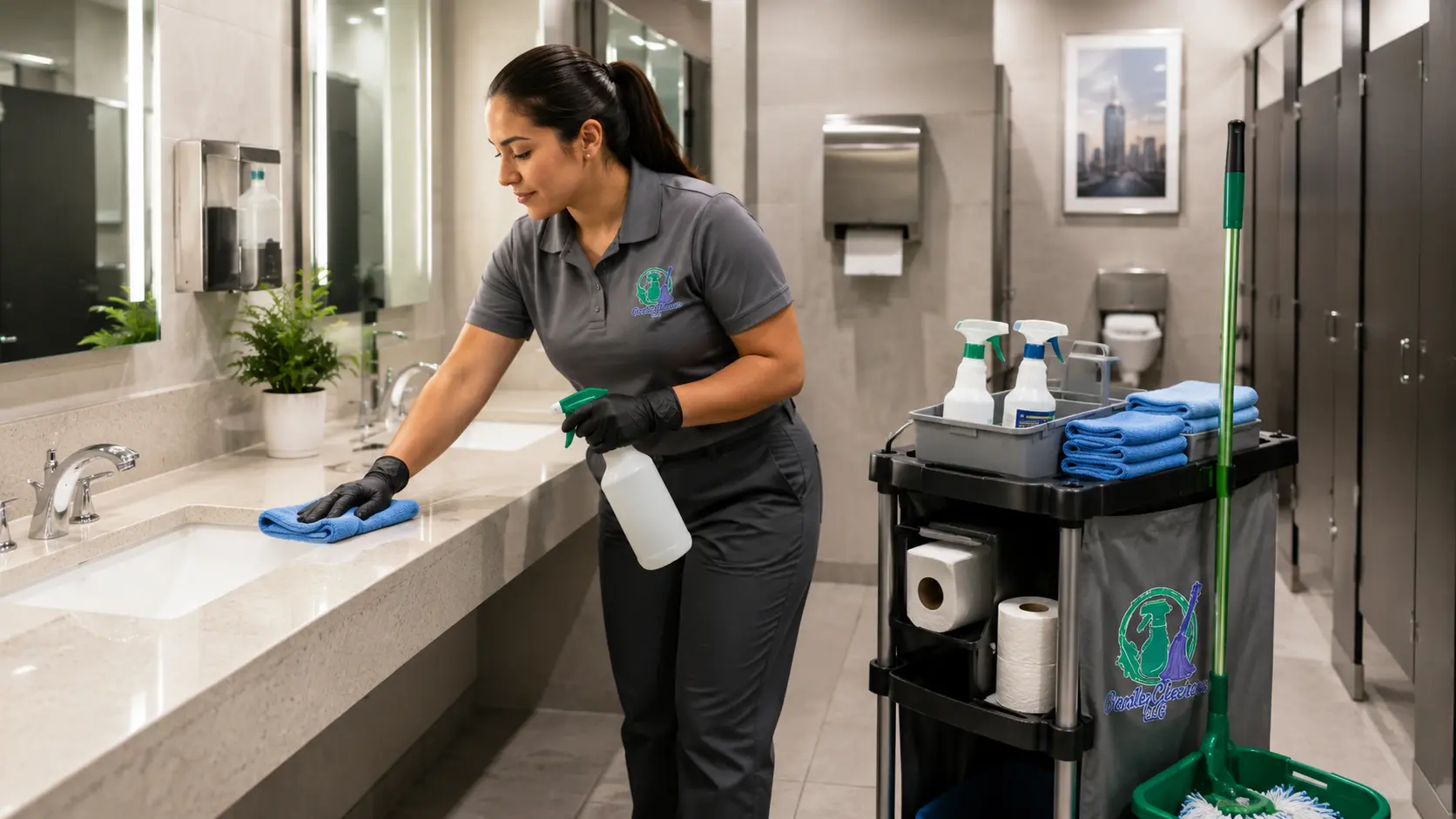
A professional commercial cleaning team brings what an ad-hoc approach cannot: a repeatable checklist performed the same way every day, EPA-registered disinfectants used with correct dwell times, color-coded tools that prevent cross-contamination, the equipment to deep-clean grout and descale fixtures, and accountability for the result. The restroom stops being the task everyone avoids and becomes a consistently clean, professional space—without pulling your team away from the work they were actually hired to do.
What Professional Restroom Service Delivers:
- Consistent, trained execution of the same standard every day
- Proper disinfection of high-touch surfaces with the right products and contact times
- Color-coded equipment that keeps restroom germs out of the rest of the office
- Deep-cleaning capability for grout, drains, and fixture descaling
- Reliable stocking and supply management matched to your traffic
- One less thankless task on your staff—and a restroom you never have to apologize for
Our interior cleaning services include thorough restroom protocols as a core part of every program, so this critical room is never an afterthought. For offices weighing a provider, our 12-point checklist for choosing a commercial cleaning company walks through exactly what to look for.
Restroom Cleaning Frequency & Priority Summary
Use this quick-reference table to make sure nothing in your restroom routine slips through the cracks. Frequencies assume a typical office—scale them up for high-traffic or client-facing spaces:
| Task | Frequency | Priority |
|---|---|---|
| High-Touch Surface Disinfection | Daily (often 2x+) | Critical |
| Toilets, Urinals & Seats | Daily | Critical |
| Restock Soap & Paper Supplies | Daily + Mid-Day Checks | Critical |
| Floors Swept & Mopped | Daily | High |
| Trash & Sanitary Bins Emptied | Daily | High |
| Mirrors & Fixtures Polished | Daily | High |
| Grout & Floor-Edge Deep Scrub | Weekly | High |
| Floor Drain Treatment | Weekly | Medium |
| Fixture Descaling | Weekly / As Needed | Medium |
| Vents, High Dusting & Bin Washing | Weekly / Monthly | Medium |
| Intensive Restoration Deep Clean | Periodic | Medium |
Make Your Boston Office Restroom a Strength, Not a Liability
Your restroom is going to make an impression whether you manage it or not—the only question is which one. A clean, fresh, well-stocked restroom quietly reinforces that your business is professional, careful, and worth trusting. A neglected one undoes that message faster than anything in your lobby can build it. The good news is that this is one of the most controllable impressions you make: with a consistent daily routine, regular deep cleaning, source-based odor control, and reliable stocking, the restroom becomes a quiet asset instead of a hidden liability.
For more on keeping your whole workspace in top shape, see our guides on how often your office should be cleaned, the health and productivity science behind professional cleaning, and our summer office cleaning checklist for keeping every room fresh through New England's warm, humid months.
Ready for a Restroom You Never Have to Apologize For?
Gentle Cleaners LLC provides thorough, dependable commercial cleaning services for businesses throughout Greater Boston—with restroom disinfection, stocking, and deep cleaning built into every program. From daily office cleaning to weekly janitorial service, we keep the room your clients judge you by spotless. Proudly serving Boston, Cambridge, Quincy, Brookline, and surrounding communities.
Call us today at (781) 901-5590 or request a free cleaning assessment.
Latest Articles
 Seasonal Tips
Summer Office Cleaning Checklist: Keeping Your Boston Workplace Fresh All Season
June 18, 2026
•11 min read
 Buyer's Guide
How Much Does Commercial Cleaning Cost in Boston? 2026 Pricing Guide
May 22, 2026
•14 min read
 Buyer's Guide
How to Choose a Commercial Cleaning Company in Boston: The 12-Point Checklist
May 2, 2026
•14 min read