Smart Cleaning Technology 2026: How AI, IoT Sensors & Robotics Are Transforming Boston Workplaces
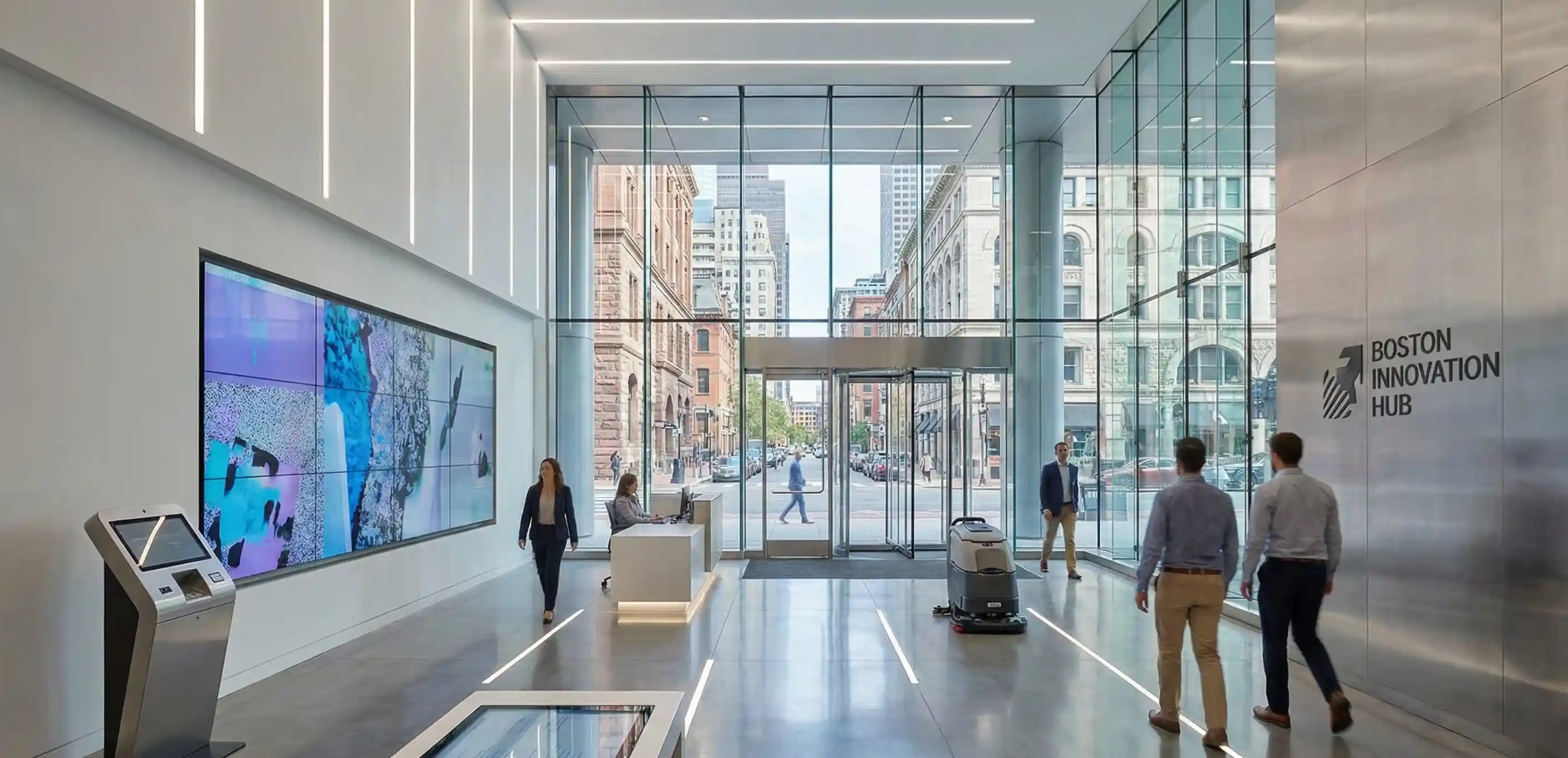
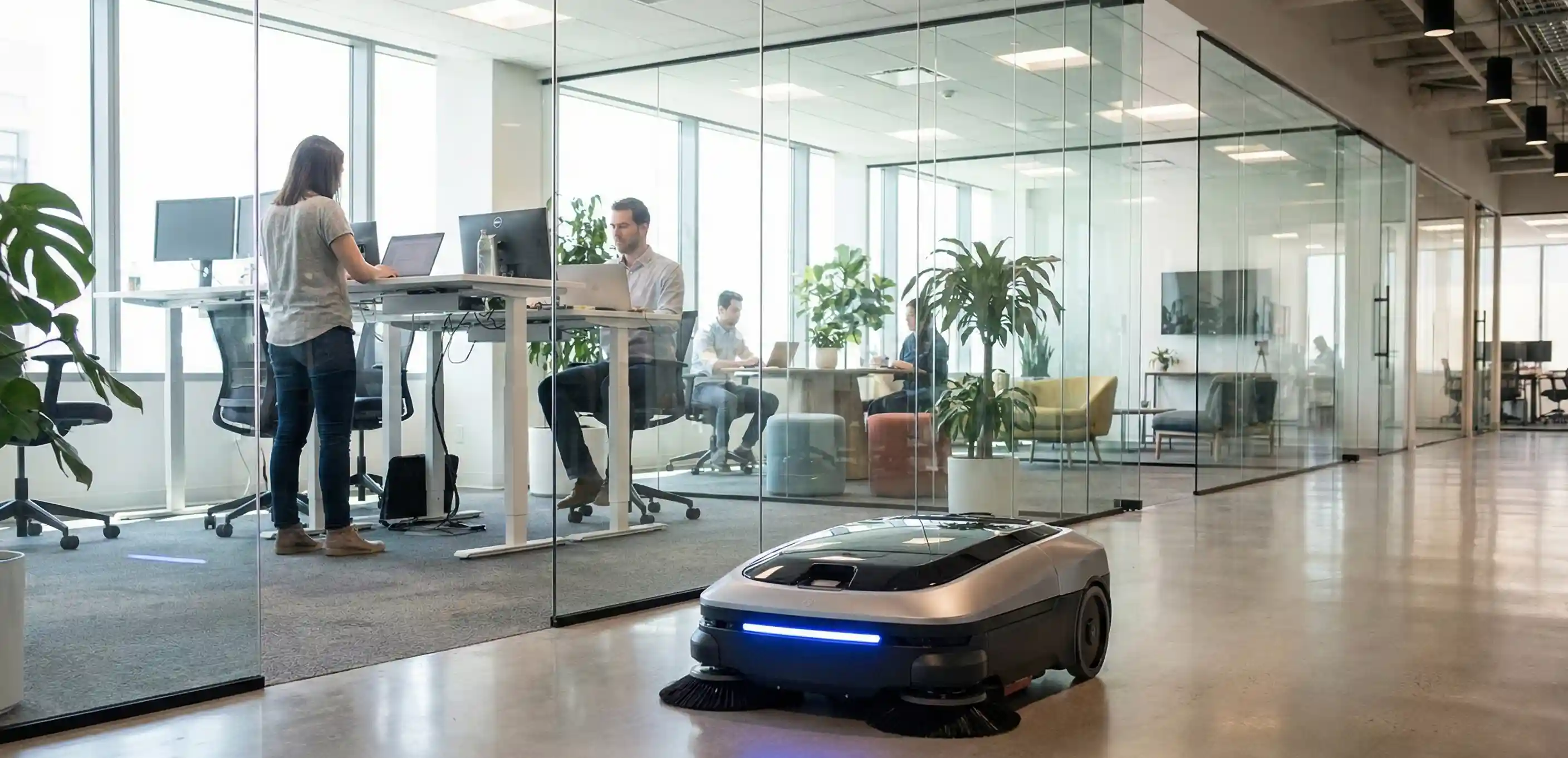
The commercial cleaning industry is experiencing its biggest transformation in decades. Artificial intelligence, Internet of Things (IoT) sensors, and autonomous robots are no longer futuristic concepts—they're actively reshaping how Boston businesses maintain their workplaces. The global cleaning robot market reached $21.15 billion in 2026 and is projected to grow to $76.61 billion by 2034, representing a massive 17.5% annual growth rate. For forward-thinking businesses in the Greater Boston Area, understanding and adopting these technologies isn't just about staying current—it's about gaining competitive advantages in efficiency, cost savings, and workplace health.
According to recent industry research, approximately 51% of commercial facilities now report operational efficiency improvements through cleaning automation. Major airports have achieved 25% cost savings through robotic cleaning pilots, while IoT-enabled buildings have cut cleaning-related costs by up to 30%. In 2026, 80% of large contract cleaning firms now rely on digital platforms for quality audits and workforce accountability. This comprehensive guide explores how these smart cleaning technologies work, their proven benefits, and how Boston businesses can leverage them for healthier, more efficient workplaces.
Whether you're managing a tech startup in Cambridge, a professional services firm in downtown Boston, or a real estate office in Quincy, smart cleaning technology offers tangible benefits that impact your bottom line. Let's explore this revolution in commercial cleaning and discover what it means for your business.
The Smart Cleaning Revolution: Understanding the Technology Landscape
Smart cleaning technology encompasses three interconnected pillars: artificial intelligence (AI) for decision-making and optimization, Internet of Things (IoT) sensors for real-time data collection, and autonomous robotics for physical cleaning tasks. Together, these technologies create an intelligent ecosystem that transforms cleaning from a reactive chore into a proactive, data-driven operation.
The global Smart Cleaning Optimization market reached $7.3 billion in 2024 and is expected to expand at a 15.2% compound annual growth rate through 2033, reaching $27.7 billion. This explosive growth reflects the real-world value these technologies deliver. According to the International Sanitary Supply Association (ISSA), 62% of commercial cleaning companies are now investing in IoT-enabled tools to optimize service frequency and reduce waste.
What makes this revolution particularly significant is its timing. Labor costs in the cleaning industry have risen 4.5% annually, driving 40% of automation deployments. Simultaneously, post-pandemic hygiene standards have elevated cleanliness expectations across all industries. Smart technology addresses both challenges: it reduces labor dependencies while delivering consistent, verifiable cleaning quality. For Boston businesses committed to professional cleaning standards, understanding these technologies is essential.
AI-Powered Cleaning: Intelligence Meets Hygiene
Artificial intelligence is fundamentally changing how cleaning decisions are made. Rather than following rigid schedules, AI-powered cleaning systems analyze real-time data to determine when, where, and how intensively spaces need attention. This shift from time-based to needs-based cleaning delivers dramatic efficiency improvements while often achieving superior cleanliness outcomes.
How AI Transforms Cleaning Operations
Modern AI cleaning systems process multiple data streams simultaneously: occupancy patterns, foot traffic analytics, air quality measurements, surface contamination levels, and even weather forecasts. By analyzing these inputs, AI algorithms predict cleaning needs before problems become visible. For example, if foot traffic in your lobby increased 40% due to a client presentation, the system automatically prioritizes that area for additional attention.
AI also optimizes cleaning routes and resource allocation. Traditional cleaning follows predetermined paths regardless of actual conditions. AI-powered systems dynamically adjust routes based on real-time needs, ensuring cleaning crews spend time where it matters most. Studies show this optimization can reduce cleaning time by up to 30% while improving overall cleanliness scores. For businesses utilizing daily office cleaning services, AI-enhanced operations deliver more value from every cleaning visit.
Predictive Maintenance and Proactive Cleaning
One of AI's most valuable applications is predictive maintenance. Instead of waiting for restroom supplies to run out or trash bins to overflow, AI systems anticipate needs based on usage patterns. According to facility management research, predictive maintenance reduces emergency service calls by 45% and eliminates the "feast or famine" cycle of reactive cleaning.
For Boston offices, predictive cleaning is particularly valuable during seasonal variations. AI systems learn that winter months bring increased entryway contamination from salt and slush, automatically adjusting cleaning frequencies and resource allocation. They recognize that flu season requires enhanced disinfection protocols in high-touch areas. This adaptive intelligence ensures your workplace receives appropriate care throughout the year—critical for maintaining the standards described in our seasonal office cleaning guide.
IoT Sensors: The Eyes and Ears of Smart Cleaning
IoT sensors form the nervous system of smart cleaning operations. These networked devices continuously monitor facility conditions, providing the real-time data that powers AI decision-making and alerts cleaning teams to immediate needs. With over 40 billion IoT devices deployed globally, sensor technology has become affordable and reliable enough for widespread commercial deployment.
The North American smart building market, which heavily incorporates cleaning-related sensors, accounts for over 35% of global revenue in 2026. This regional leadership reflects the high adoption rate among U.S. commercial facilities—and presents significant opportunities for Boston businesses to gain competitive advantages through early adoption.
Types of Cleaning-Related IoT Sensors
Modern smart cleaning deployments utilize several sensor categories, each serving specific monitoring functions:
- Occupancy Sensors: Track foot traffic and space utilization to trigger needs-based cleaning. When a conference room sees heavy use, sensors alert teams that cleaning is needed sooner than scheduled.
- People Counters: Measure how many individuals enter specific areas like restrooms, enabling usage-based service rather than arbitrary time intervals.
- Supply Level Sensors: Monitor paper towel dispensers, soap dispensers, and toilet paper holders, alerting staff when restocking is needed—eliminating empty dispensers that frustrate employees.
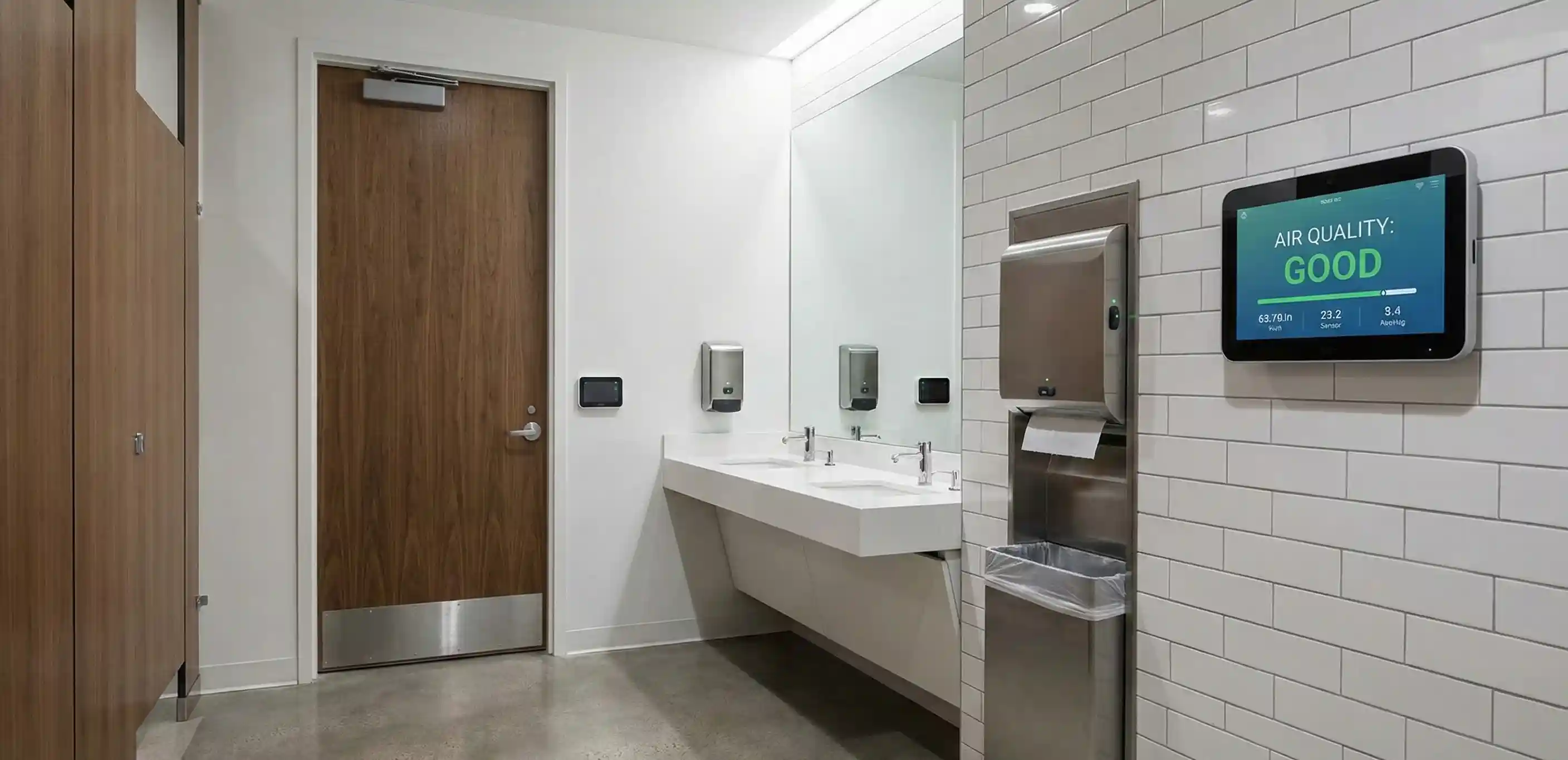
- Air Quality Sensors: Measure particulate matter, VOCs, CO2 levels, and humidity to ensure healthy indoor environments and trigger ventilation or cleaning responses when needed.
- Waste Bin Sensors: Detect fill levels in trash receptacles, optimizing collection routes and preventing overflow situations.
- Surface Contamination Sensors: Advanced ATP (adenosine triphosphate) monitoring that measures biological contamination on surfaces, providing objective cleanliness verification.
Real-World IoT Success Stories
The impact of IoT sensors on cleaning operations is well-documented. Jacksonville International Airport implemented smart restroom monitoring using IoT sensors to track usage and air quality. The result? Cleaning is now based on actual usage patterns, saving labor costs while improving passenger experience. Major facility management companies like Coor and Klüh Multiservices report that IoT-driven cleaning programs eliminate redundant services while uncovering previously unknown cleaning needs.
For a typical Boston office, IoT sensors can deliver transformative results. Consider restroom maintenance: traditional cleaning schedules might call for service every two hours regardless of actual use. With IoT sensors tracking usage, a restroom that sees minimal traffic might need cleaning only twice daily, while a high-traffic facility receives attention every 90 minutes during peak periods. This optimization typically reduces restroom-related complaints by 60% while actually lowering total cleaning hours. Our weekly janitorial services incorporate these smart monitoring principles to maximize value for your business.
Autonomous Cleaning Robots: The Workforce Revolution
Robotic cleaners have evolved from novelty items to serious commercial tools. The commercial cleaning robot segment has grown to $0.85 billion in 2026, representing 27% of the total cleaning robot market, with projected growth of 6.9% annually through 2035. These autonomous machines handle time-consuming, repetitive tasks like floor scrubbing and vacuuming, freeing human workers for higher-value activities that require judgment and precision.
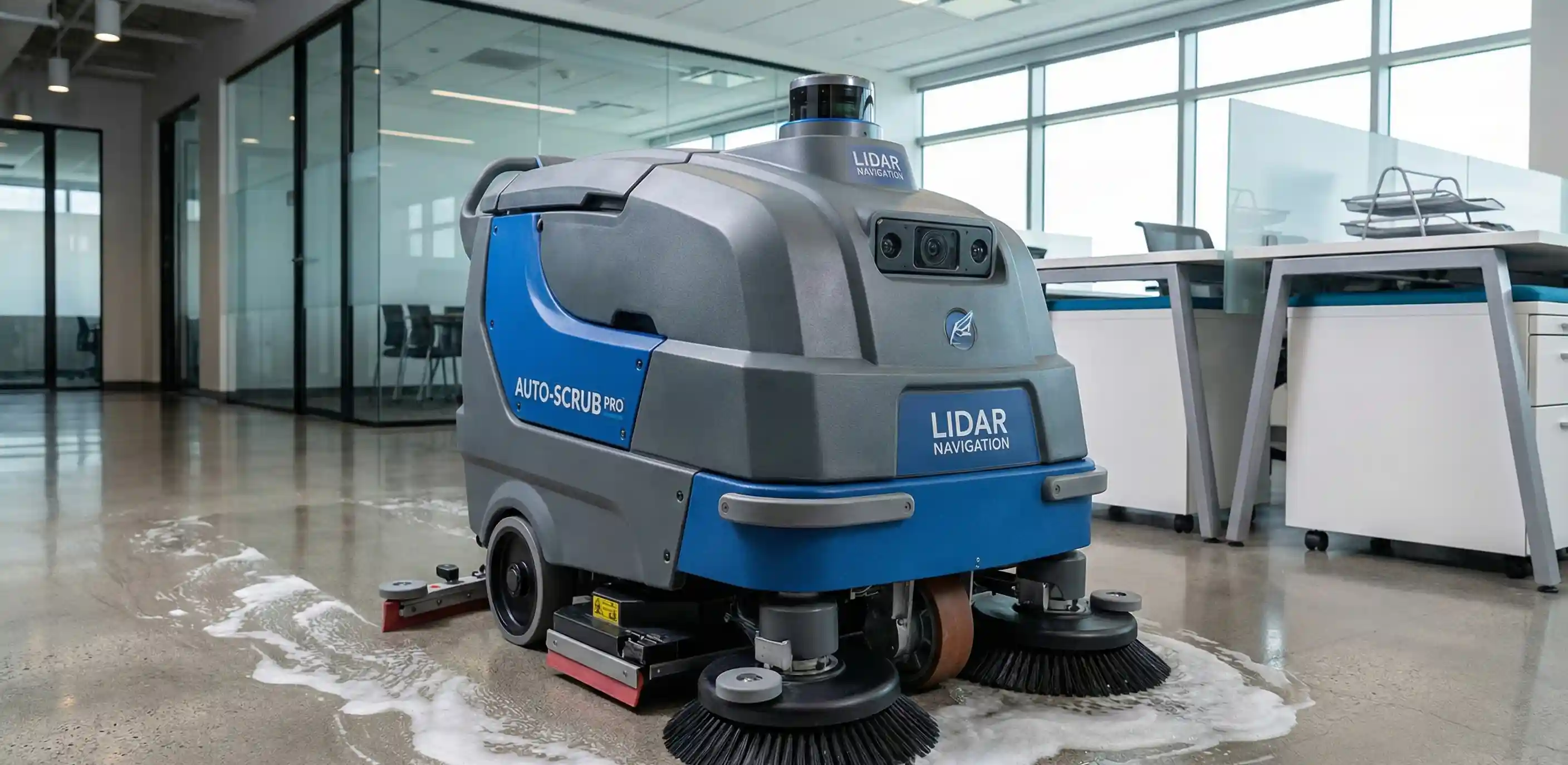
Modern commercial cleaning robots bear little resemblance to consumer devices. Industrial units like the PUDU CC1 Pro can clean 5,000 to 8,000 square meters per operation—equivalent to covering an entire floor of a major office building. These machines use advanced LIDAR navigation, obstacle avoidance algorithms, and machine learning to operate safely alongside employees, automatically adjusting their behavior based on environmental conditions.
Types of Commercial Cleaning Robots
Today's commercial cleaning robot ecosystem includes several specialized machine types:
- Autonomous Floor Scrubbers: Handle hard floor maintenance including scrubbing, polishing, and water recovery. Industrial models achieve consistent results across thousands of square feet while using significantly less water than manual methods.
- Robotic Vacuum Cleaners: Designed for carpet and hard floor vacuuming with HEPA filtration, mapping capabilities, and scheduled operation during off-hours.
- Disinfection Robots: Utilize UV-C light or electrostatic spraying to sanitize surfaces. Post-pandemic adoption increased disinfection bot use by 35% in hospitality and healthcare sectors.
- Window Cleaning Robots: Specialized units for interior and exterior glass cleaning, particularly valuable for high-rise Boston office buildings.
- Multi-Function Robots: Newer models combine vacuuming, mopping, and UV disinfection in single platforms, maximizing versatility.
ROI and Cost Benefits of Cleaning Robots
The financial case for cleaning robots is compelling. According to industry analysis, ROI for floor-scrubber robots typically reaches 12-18 months, with pilot programs at major U.S. airports achieving 25% cost savings. The total cost of ownership includes the initial equipment investment, maintenance, and supplies—but excludes the wage increases, benefits, and turnover costs associated with human labor.
Consider the mathematics for a typical Boston office: an autonomous floor scrubber with an average 7-year lifespan can deliver savings of approximately $296,100 over that period compared to equivalent manual labor. Labor represents 55-85% of cleaning company budgets, making automation a strategic priority for controlling costs while maintaining quality.
Beyond direct cost savings, robots deliver consistency advantages. They don't have bad days, don't cut corners when unsupervised, and maintain identical performance at 7 PM as they do at 7 AM. This reliability is particularly valuable for businesses requiring verifiable cleaning quality—essential for healthcare-adjacent facilities, food service areas, and any space where cleanliness directly impacts customer perception. Learn more about the importance of consistent cleaning in our commercial cleaning science guide.
Advanced Disinfection Technologies: UV-C Light & Electrostatic Sprayers
Smart cleaning technology extends beyond automation to include advanced disinfection methods that achieve superior pathogen elimination. Two technologies have emerged as particularly impactful: UV-C germicidal lighting and electrostatic spraying systems. Both leverage physics and chemistry to reach contamination that traditional wiping simply cannot address.
UV-C Disinfection: Light That Kills Pathogens
Ultraviolet-C light (200-280nm wavelength) destroys pathogens by damaging their DNA and RNA, preventing replication. According to research from the CDC, UV-C light achieves 99.9% pathogen reduction with appropriate exposure times. A Lancet study demonstrated that UV-C systems in ventilation resulted in 99% reduction of microbial concentrations.
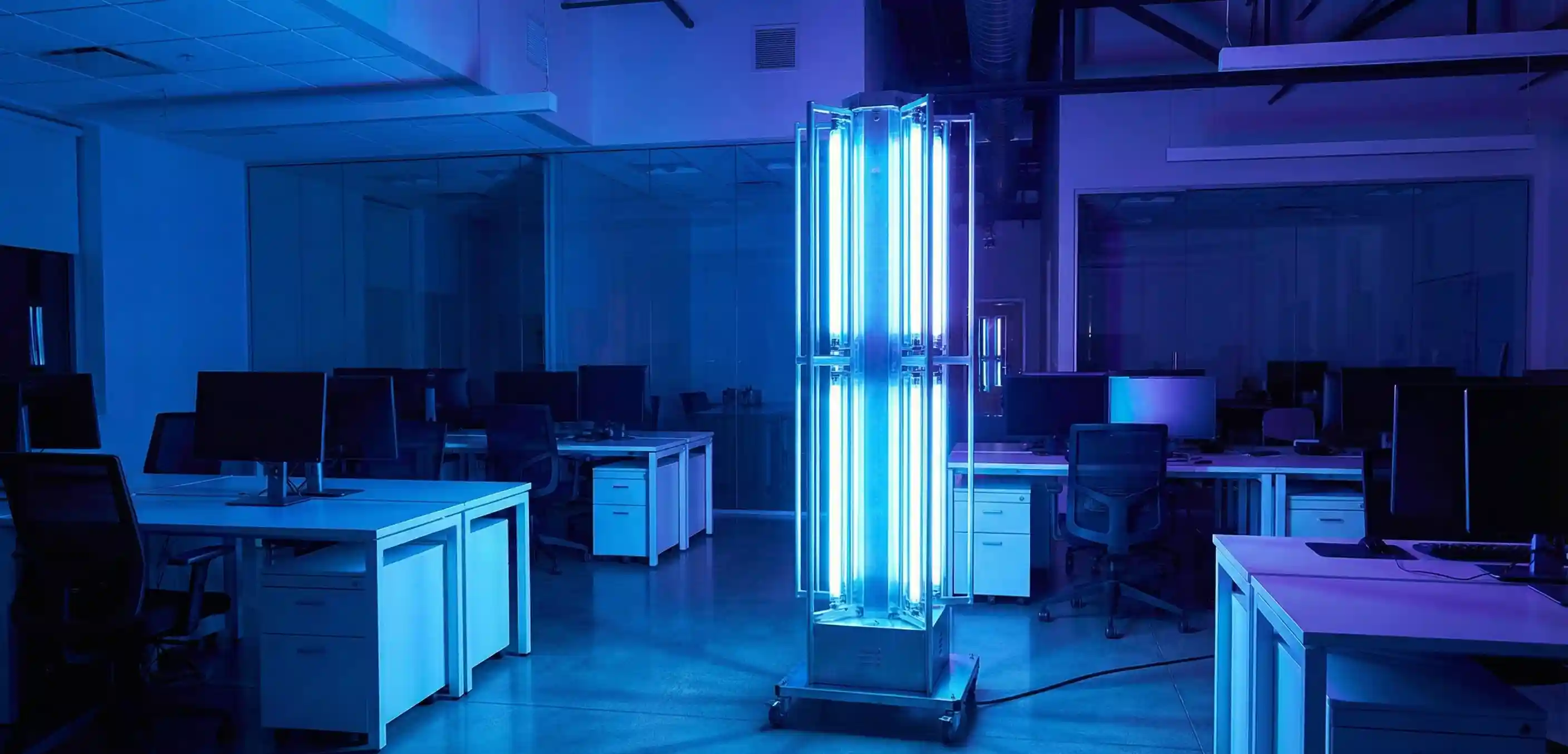
Commercial UV-C applications include mobile disinfection units that can treat entire rooms, in-duct systems that sanitize air as it circulates through HVAC, and fixture-mounted units for continuous surface treatment in high-risk areas. Signify's UV-C lighting inactivated 99% of SARS-CoV-2 virus on surfaces with just 9 seconds of exposure in laboratory testing. For a typical 500-square-foot room, installation costs range from $1,500-$2,500 with two to three UV fixtures.
Important considerations: UV-C efficacy depends on intensity, exposure time, distance from surfaces, and line-of-sight coverage. UV-C should supplement rather than replace traditional cleaning—organic matter must be removed first for UV-C to reach pathogens effectively. When properly integrated into comprehensive cleaning programs like our daily office cleaning services, UV-C provides an additional layer of protection that traditional methods cannot match.
Electrostatic Spraying: Complete Surface Coverage
Electrostatic sprayers apply disinfectants more efficiently than any other method. The technology gives disinfectant droplets a positive electrical charge as they exit the sprayer. These charged droplets are attracted to negatively-charged surfaces—including undersides, backsides, and hidden areas that conventional spraying misses entirely. Research published by the NIH confirmed that electrostatic application effectively eliminated test pathogens from inoculated surfaces.
The efficiency benefits are substantial: electrostatic spraying reduces cleaning time by up to 80% and disinfectant use by up to 65% compared to traditional methods. Airlines, schools, and transit agencies have adopted the technology for rapid disinfection of large surface areas. The EPA notes that while electrostatic spraying shows promise, maintaining proper contact time remains essential—the surface must stay wet long enough for the disinfectant to work.
Real-Time Monitoring Dashboards: Visibility and Accountability
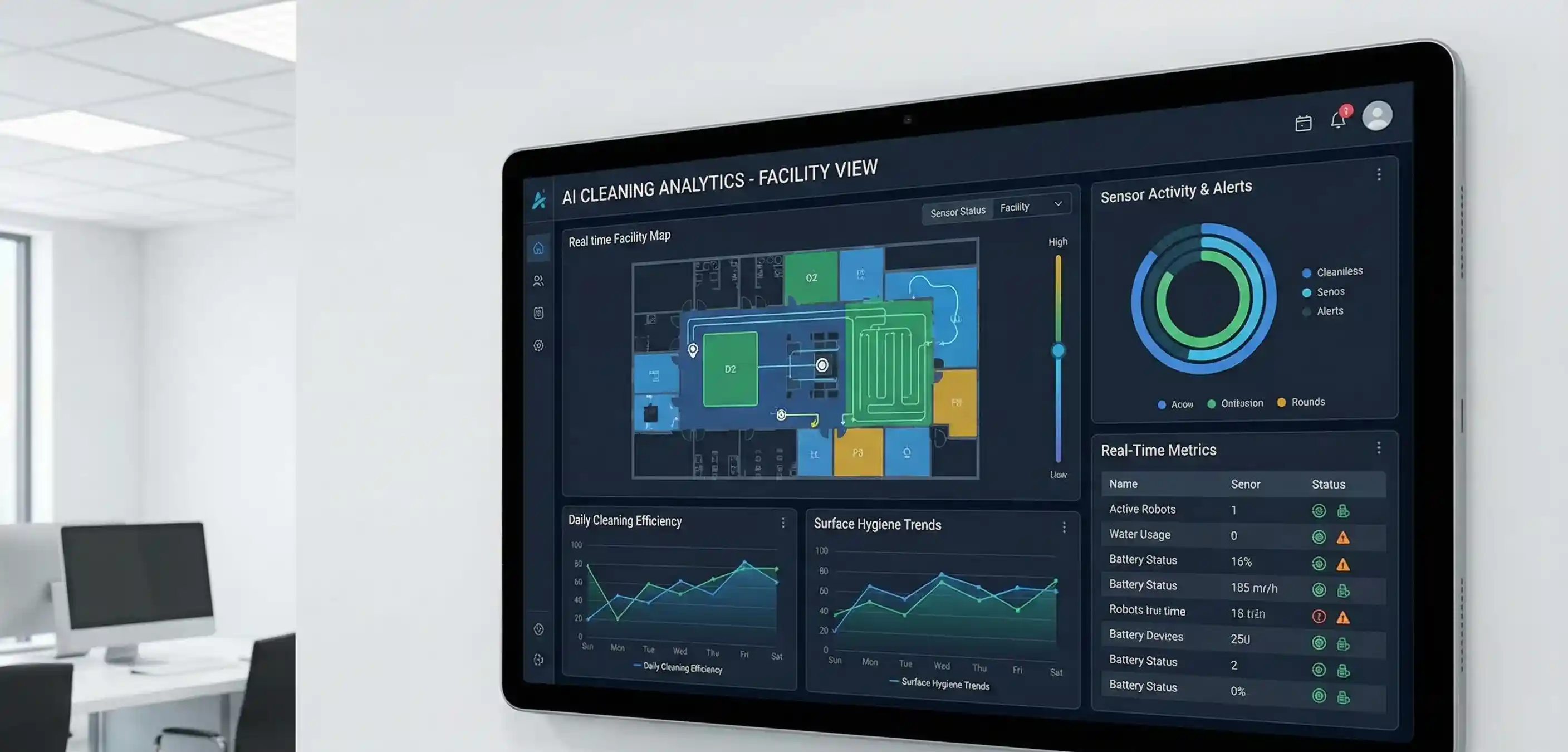
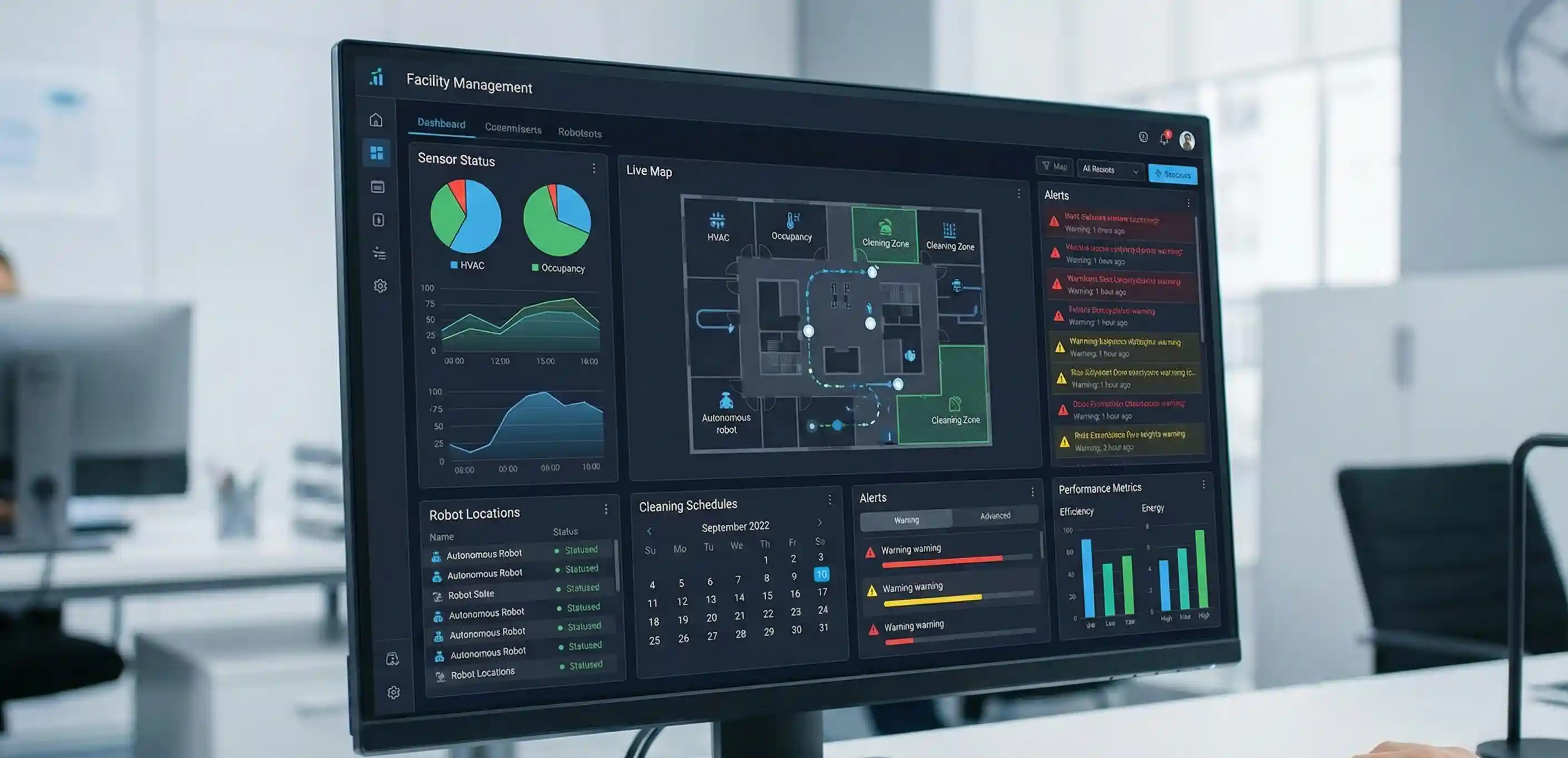
Data without visibility is data wasted. Modern smart cleaning systems consolidate sensor inputs, robot status, and cleaning verification into unified dashboards that provide real-time operational visibility. These platforms transform cleaning from an invisible service into a transparent, accountable operation—valuable for both facility managers and cleaning providers.
According to facility management research, 70% of facility managers have elevated digital transformation to a core strategic position. This shift reflects recognition that data-driven operations deliver measurable advantages. Cleaning dashboards typically provide live monitoring of facility conditions, automated alerts when attention is needed, historical analytics for trend identification, and compliance reporting for quality assurance.
Dashboard Features and Capabilities
Modern cleaning management dashboards offer comprehensive functionality:
- Live Status Monitoring: Real-time visualization of all sensors, robots, and facility zones with color-coded status indicators.
- Automated Alerting: Instant notifications when supplies run low, bins fill up, air quality degrades, or cleaning schedules are missed.
- Performance Analytics: Track cleaning frequency, response times, completion rates, and quality scores over time.
- Resource Optimization: AI-powered recommendations for staffing levels, route optimization, and supply ordering.
- Compliance Documentation: Automated logs proving cleaning occurred as scheduled—essential for healthcare facilities and food service operations.
- ESG Reporting: Environmental metrics including water usage, chemical consumption, and waste diversion rates for sustainability reporting.
Companies like TRAX Analytics and Zan Compute have developed comprehensive platforms specifically for janitorial operations. TRAX's solution enables data-driven facility management through sensor integration and analytical tools. These platforms provide the transparency that discerning Boston businesses expect from their commercial cleaning partners.
Implementing Smart Cleaning: A Practical Guide for Boston Businesses
Adopting smart cleaning technology doesn't require wholesale facility transformation. Most businesses benefit from phased implementation that addresses highest-impact areas first while building internal expertise and demonstrating ROI before broader rollout.
Phase 1: Assessment and Quick Wins
Begin with an honest assessment of current cleaning operations. Identify pain points: Are restroom complaints frequent? Do lobbies stay consistently clean during high-traffic periods? Is your cleaning spend aligned with actual facility needs? Many businesses find that simple IoT sensors in restrooms and high-traffic areas deliver immediate value with minimal investment.
Quick wins often include supply-level sensors that eliminate empty dispensers, occupancy counters that optimize cleaning schedules, and basic dashboard visibility into cleaning operations. These initial deployments typically cost $2,000-$5,000 for a mid-sized office and generate measurable improvements within weeks.
Phase 2: Automation and Integration
Once baseline monitoring is established, consider automation opportunities. Robotic floor cleaners are often the first major automation investment, as they address large surface areas with clear ROI metrics. Integrate robots with your monitoring dashboard to track performance and optimize scheduling.
This phase also involves connecting smart cleaning systems with broader building management. Integration with HVAC systems enables coordinated responses to air quality issues. Connection with access control systems allows cleaning schedules to adapt to actual occupancy patterns. For businesses in Boston, Cambridge, Quincy, and Weymouth, these integrations are particularly valuable given the region's dramatic seasonal variations and hybrid work patterns.
Phase 3: Advanced Analytics and Optimization
Mature smart cleaning implementations leverage accumulated data for continuous optimization. AI algorithms identify patterns human observers miss: perhaps certain conference rooms consistently need more attention on Tuesdays, or air quality in one wing degrades faster than others. These insights enable proactive interventions and ongoing efficiency improvements.
Advanced analytics also support strategic decision-making. Data-driven insights help determine optimal cleaning frequencies for different areas, identify opportunities for service level adjustments, and provide objective metrics for evaluating cleaning provider performance. This analytical capability transforms cleaning from a cost center into a strategically managed operation—aligned with the data-driven approaches Boston businesses increasingly expect.
Cost-Benefit Analysis: The Business Case for Smart Cleaning
Smart cleaning technology delivers measurable financial returns. While implementation requires upfront investment, the payback periods are typically short and ongoing savings substantial. Understanding the complete financial picture helps Boston businesses make informed technology decisions.
| Technology | Typical Investment | Expected Savings | ROI Timeline |
|---|---|---|---|
| IoT Restroom Sensors | $1,500-$3,000 | 15-25% labor reduction | 6-12 months |
| Autonomous Floor Scrubber | $20,000-$50,000 | $296,100 over 7-year lifespan | 12-18 months |
| UV-C Disinfection System | $1,500-$2,500/room | Reduced sick days, infection control | 12-24 months |
| Electrostatic Sprayer | $500-$3,000 | 65% less chemical, 80% faster | 2-6 months |
| Cleaning Analytics Dashboard | $200-$500/month | 20-30% operational efficiency | 3-6 months |
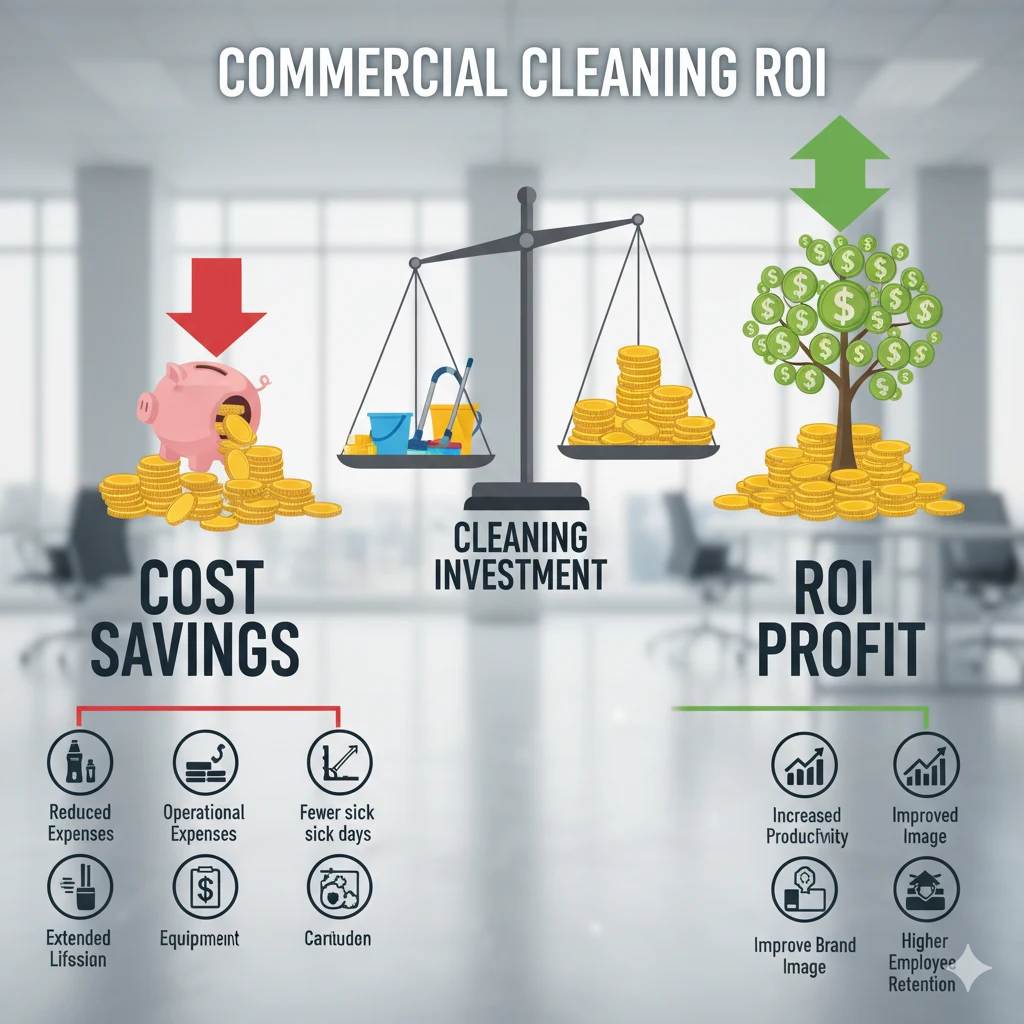
Beyond direct cost savings, smart cleaning delivers "soft" benefits that impact overall business performance. Consistent cleanliness improves employee satisfaction and reduces turnover—significant given that 92% of customers consider cleanliness important when deciding to return to a business. Better air quality reduces sick days and improves productivity, as documented in our office cleaning frequency guide. Verified cleaning compliance provides peace of mind and reduces liability exposure.
Sustainability and Environmental Benefits
Smart cleaning technology aligns naturally with sustainability goals—a priority for many Boston businesses. Automated systems optimize resource consumption, reducing water usage, chemical consumption, and energy waste. IoT-enabled waste management improves recycling rates and reduces collection frequency. These environmental benefits support ESG reporting requirements while reducing operational costs.
Consider water usage: industrial floor scrubbers using smart dispensing systems reduce water consumption by up to 70% compared to manual mopping. Chemical usage drops proportionally, reducing both costs and environmental impact. Air quality monitoring prevents unnecessary HVAC operation while ensuring healthy indoor environments. For businesses committed to eco-friendly cleaning practices, smart technology amplifies sustainability efforts.
Modern cleaning dashboards provide ESG-ready reporting including total chemical usage, water consumption, waste diversion rates, and carbon footprint metrics. This data supports sustainability reports, green building certifications, and stakeholder communications. As environmental accountability increases across industries, smart cleaning technology provides the documentation and optimization capabilities businesses need.
The Future of Smart Cleaning: What's Next
The smart cleaning revolution is accelerating. Several emerging trends will shape the next generation of cleaning technology:
- Self-Cleaning Surfaces: Antimicrobial coatings and nanotechnology are creating surfaces that resist contamination. The global antimicrobial coatings market is projected to reach $20.1 billion by 2026, with commercial facilities increasingly specifying these materials for high-touch surfaces.
- Advanced Robotics: Next-generation robots will combine multiple cleaning functions, navigate more complex environments, and collaborate with human workers more seamlessly. Expect robots that vacuum, mop, and disinfect in single passes.
- Predictive Air Quality: AI systems will anticipate air quality issues before they occur, triggering proactive ventilation and filtration responses. Integration with weather data and occupancy forecasts will enable truly predictive environmental management.
- Voice and Mobile Interfaces: Facility managers will interact with cleaning systems through natural language commands and mobile apps, enabling real-time adjustments and instant issue reporting.
- Blockchain Verification: Tamper-proof cleaning verification using distributed ledger technology, providing irrefutable documentation for compliance-sensitive industries.
Choosing a Smart Cleaning Partner for Your Boston Business
Implementing smart cleaning technology requires expertise in both technology and cleaning operations. When evaluating partners, consider their experience with technology integration, their commitment to staying current with industry advances, and their ability to customize solutions for your specific facility needs.
Key questions to ask potential partners:
- What smart cleaning technologies do you currently utilize or support?
- How do you measure and report cleaning quality and compliance?
- Can you integrate with our existing building management systems?
- What training and support do you provide for new technology implementations?
- How do you balance automation with human expertise for optimal results?
At Gentle Cleaners LLC, we combine deep cleaning expertise with technology awareness to deliver optimal results for Boston businesses. While we focus on delivering exceptional cleaning outcomes using appropriate technologies, we partner with specialized technology providers when clients need comprehensive smart building integrations. Our approach ensures you receive both superior cleaning quality and access to relevant technological capabilities.
Embrace the Smart Cleaning Revolution
Smart cleaning technology represents one of the most significant opportunities for operational improvement available to Boston businesses today. From AI-powered optimization and IoT sensor networks to autonomous robots and advanced disinfection systems, these technologies deliver measurable benefits in efficiency, cost savings, sustainability, and workplace health.
The businesses that embrace these technologies now will gain competitive advantages that compound over time. They'll attract employees who appreciate modern, healthy workplaces. They'll impress clients with visible technology sophistication. They'll reduce costs while improving outcomes. And they'll build the data foundation for continuous improvement as smart cleaning technology continues evolving.
For businesses throughout Greater Boston—from innovative Cambridge startups to established downtown corporations—the smart cleaning revolution is here. The question isn't whether to adopt these technologies, but how quickly and strategically to implement them. For more insights on maintaining optimal workplace cleanliness, explore our guides on signs your office needs professional cleaning and office cleaning tips for productivity.
Ready to Modernize Your Office Cleaning?
Gentle Cleaners LLC provides forward-thinking commercial cleaning services for businesses throughout Greater Boston. From daily office cleaning to weekly janitorial services, we combine proven cleaning expertise with awareness of the latest industry technologies. Serving Boston, Cambridge, Quincy, Weymouth, and surrounding communities.
Schedule Your Free Consultation Today! We'll assess your facility, discuss your cleaning challenges, and recommend solutions that fit your needs and budget. Pre-Estimate Onsite Visit Fee: $100-150 (applied to your first service when you sign up).
Call us now: (781) 901-5590 or (781) 927-4281
Or request a consultation online and we'll respond within 24 hours.
Latest Articles
 Office Tips
What Your Office Restroom Says About Your Business: A Boston Commercial Restroom Cleaning Guide
June 25, 2026
•12 min read
 Seasonal Tips
Summer Office Cleaning Checklist: Keeping Your Boston Workplace Fresh All Season
June 18, 2026
•11 min read
 Buyer's Guide
How Much Does Commercial Cleaning Cost in Boston? 2026 Pricing Guide
May 22, 2026
•14 min read