Norovirus in the Office: What Kills It and How to Clean Up After a Stomach Bug
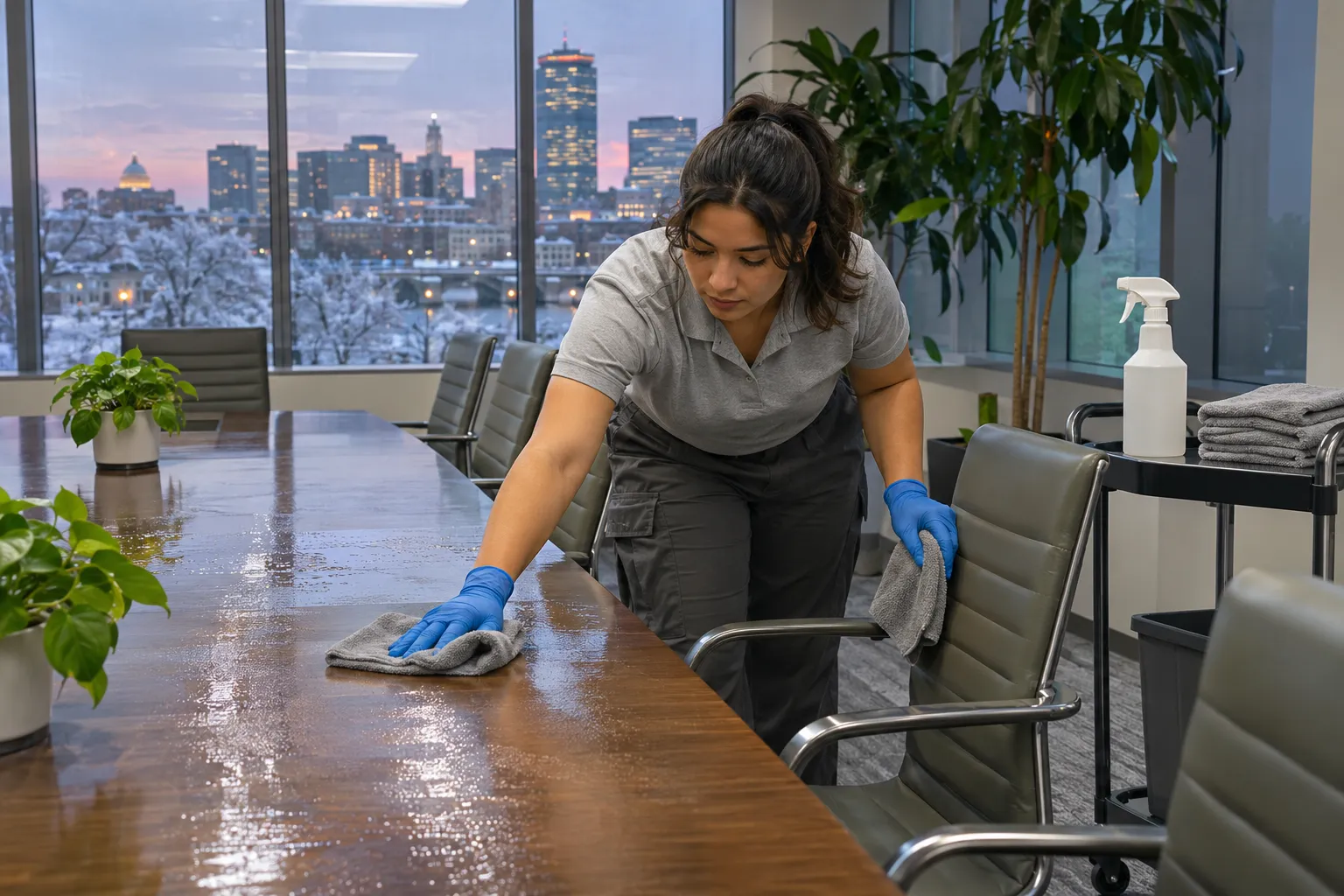
Few things empty an office faster than a stomach bug. One person gets sick on a Tuesday, three more call out by Friday, and suddenly half the team is wondering what they touched. That bug is usually norovirus, the leading cause of vomiting and diarrhea in the United States. The CDC estimates it causes 19 to 21 million illnesses a year, and outbreaks are most common from November to April. For offices across the Greater Boston Area, that window starts now and runs right through the holiday parties, the potlucks, and the long stretch of winter when everyone is indoors with the windows shut.
The problem is that most office cleaning routines are built around colds, flu, and COVID. Norovirus plays by different rules. Hand sanitizer doesn't work well against it, many everyday disinfectants are weaker against it, and the virus holds up on surfaces far longer than most people expect. This guide covers what kills norovirus on surfaces, which products actually work, exactly how to clean up when someone gets sick at work, and how to keep a single case from turning into an office-wide outbreak.
1. Why Norovirus Spreads So Fast in an Office
Norovirus is one of the most contagious germs there is. According to the CDC's norovirus outbreak guidelines, the infectious dose may be as low as 18 virus particles, while a sick person can shed billions. That math is why one bad afternoon in the restroom can reach a whole floor.
Four Reasons Offices Are Easy Targets:
- People are contagious before and after they feel sick. Symptoms usually start 12 to 48 hours after exposure, and the CDC notes people can still spread the virus for two weeks or more after they feel better.
- The virus is hardy on surfaces. A 2015 study in the Journal of Food Protection tracked norovirus on stainless steel and plastic for 70 days and concluded it appears to remain infective for weeks.
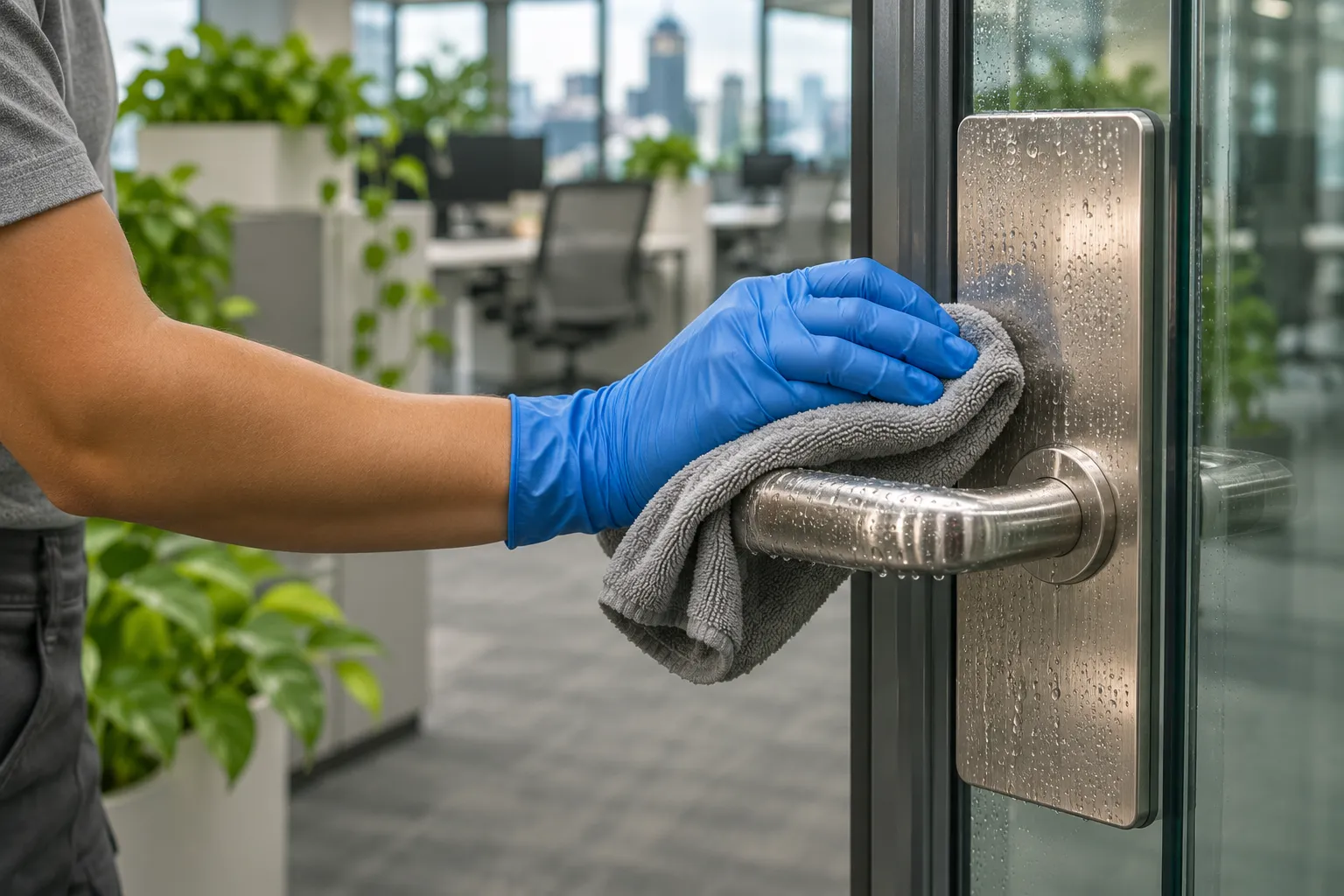
- Everyone touches the same things. Restroom faucets and flush handles, the break room fridge, the coffee pot, elevator buttons, and the conference room door handle are shared by the whole office.
- People come to work anyway. Many employees write off the first few hours as “something I ate” and show up, especially during busy year-end weeks.
2. Norovirus vs. Flu: Why Your Usual Wipe-Down Falls Short
Flu, COVID-19, and RSV are enveloped viruses. They're wrapped in a fragile, fatty outer layer that soap, alcohol, and most disinfectants break down quickly. Norovirus is a non-enveloped virus with a tough protein shell, and that shell is why it shrugs off a lot of what offices use every day. The CDC's outbreak guidelines specifically note that quaternary ammonium (“quat”) and phenolic disinfectants, which are among the most common office products, are less effective against viruses like norovirus.
| Flu, COVID-19, RSV | Norovirus | |
|---|---|---|
| Virus type | Enveloped (easier to kill) | Non-enveloped (harder to kill) |
| Main symptoms | Respiratory: cough, fever, congestion | Vomiting, diarrhea, stomach pain |
| Hand sanitizer | A good backup when you can't wash | Doesn't work well. Wash with soap and water |
| Typical office disinfectant | Usually effective when used as labeled | Only if the label lists norovirus (EPA List G) |
| Peak season | Fall through early spring | November to April |
The takeaway: a cleaning program that handles flu season well can still leave you exposed to norovirus. Our winter office cleaning checklist covers the respiratory side of the season. This guide covers the stomach bug side.
3. What Kills Norovirus on Surfaces?
The CDC's prevention guidance gives you two options for hard surfaces:
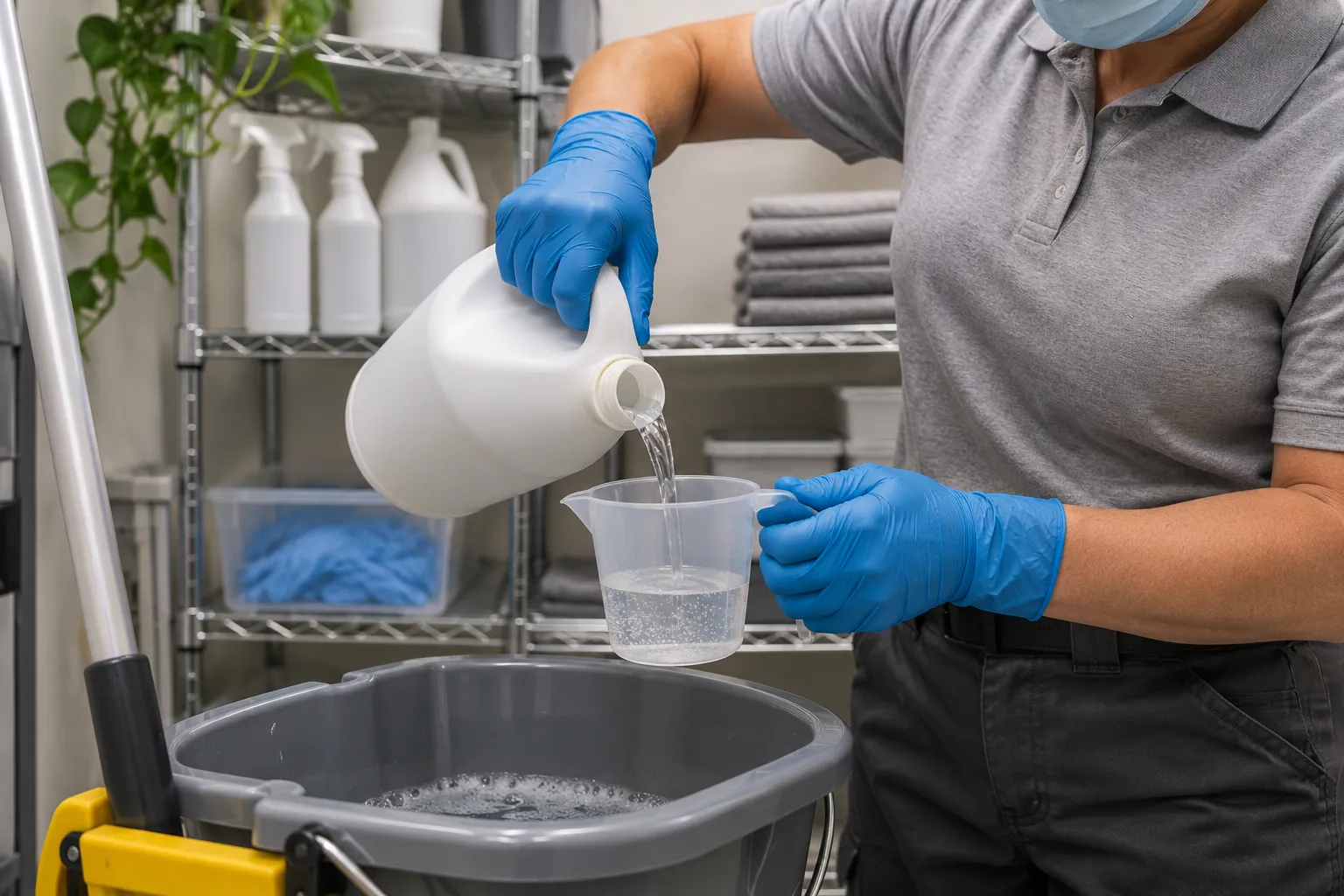
- A chlorine bleach solution at 1,000 to 5,000 ppm, which works out to 5 to 25 tablespoons of household bleach (5% to 8%) per gallon of water. Leave it on the surface for at least 5 minutes.
- An EPA-registered disinfectant that lists norovirus on its label. The EPA keeps these products on List G, which includes bleach-based, hydrogen peroxide, and some quat and alcohol formulas that have been tested against norovirus.
Bleach Mixing Guide for Norovirus
- Lower end (about 1,000 ppm): 5 tablespoons (1/3 cup) of household bleach per gallon of water
- Upper end (about 5,000 ppm): 25 tablespoons (about 1 1/2 cups) per gallon of water, for areas soiled by vomit or diarrhea
- Contact time: keep the surface wet for at least 5 minutes, then rinse food-contact surfaces with clean water
- Mix it fresh each day in a labeled container. Diluted bleach loses strength over time.
- Never mix bleach with ammonia, vinegar, or other cleaners. Open a window or run the exhaust fan.
Use regular, unscented household bleach whose label includes disinfection directions. Color-safe and splash-less formulas are often not made for disinfecting. Bleach can also discolor fabrics and corrode some metals, so test it in an inconspicuous spot and rinse stainless steel afterward.
The Two Rules Most Offices Miss
Clean first, then disinfect. Disinfectants don't work well through grime, food residue, or bodily fluids. The CDC's guidelines call for removing visible soil before disinfecting, so wipe the surface clean with detergent and water first, then apply the disinfectant.
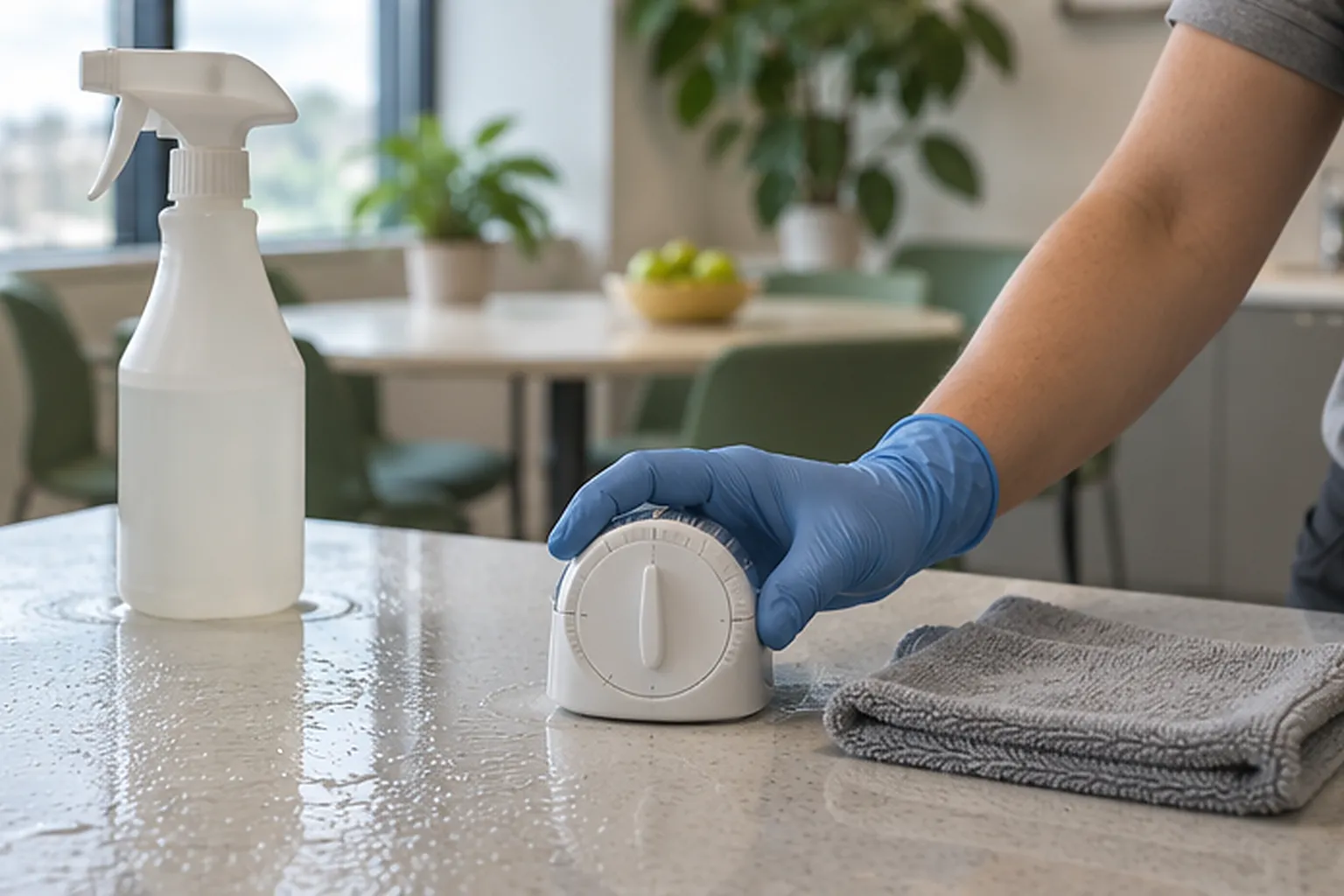
Respect the contact time. Contact time, sometimes called dwell time, is how long the surface has to stay wet for the product to work. On List G, contact times range from 30 seconds to 15 minutes, and most fall between 1 and 10 minutes. A quick spray-and-wipe that dries in 20 seconds doesn't meet it. If the surface starts to dry early, apply more.
4. Does Lysol, Clorox, or Hand Sanitizer Kill Norovirus?
These are some of the most-searched questions every winter, and the honest answer is “it depends on the exact product.”
Does Lysol Kill Norovirus?
Some Lysol products do and some don't. Several Lysol formulas appear on EPA List G, and the ones listed there carry a 10-minute contact time for norovirus. Other products under the same brand name aren't on the list at all. A brand name tells you nothing about the formula in a specific bottle.
Does Clorox Kill Norovirus?
Same story. Many Clorox bleach products and a number of Clorox Professional disinfectants and wipes are on List G, with contact times from under a minute to 10 minutes. Others aren't, and wipes need to leave the surface visibly wet for the full contact time, which often means more than one wipe on a large surface.
How to Check Any Product in 60 Seconds
- Find the EPA Reg. No. on the label (it looks like 12345-67).
- Search that number on the EPA's List G page.
- Check the label's directions for norovirus and note the contact time and the surfaces it's approved for.
- Write the contact time on the bottle or the supply shelf so everyone who uses it knows.
Does Hand Sanitizer Kill Norovirus?
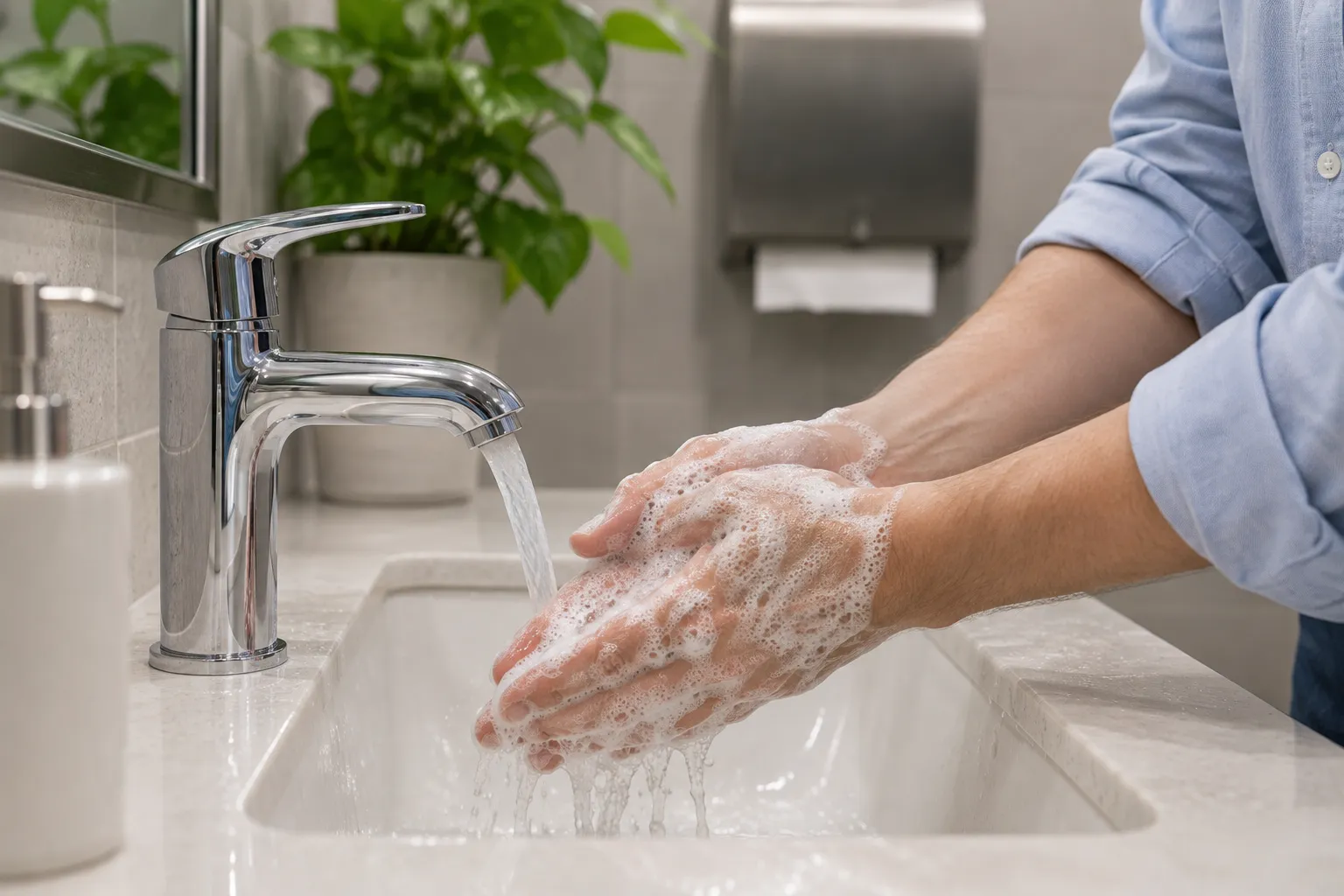
Not well. The CDC says plainly that hand sanitizer does not work well against norovirus and is not a substitute for handwashing. Washing with soap and running water for at least 20 seconds physically removes the virus from your hands, which is what matters with a germ this contagious. Keep sanitizer stations for flu season, but make sure every restroom and kitchen sink is stocked with soap and paper towels, and post a simple “soap and water, 20 seconds” reminder above them.
5. How to Clean Up After Someone Gets Sick at Work
When someone vomits or has diarrhea at work, the next 30 minutes decide whether you have one sick employee or ten. The CDC's guidance is to clean well and disinfect the entire area immediately, not just the visible spot. Here's a step-by-step protocol based on that guidance. Print it and keep it with your cleanup supplies.
Norovirus Cleanup Protocol (Hard Surfaces)
- Close off the area. Keep people away and, if you can, open a window or turn on the exhaust fan.
- Gear up. Put on disposable gloves and a mask. Add a disposable apron and eye protection if you have them.
- Remove the mess. Use disposable paper towels or an absorbent powder, working from the outside in. Seal everything in a plastic bag.
- Clean. Wash the area with detergent and water to remove all visible residue.
- Disinfect the whole area. Apply a bleach solution or a List G product well beyond the visible spot, and keep it wet for the full contact time (at least 5 minutes for bleach).
- Rinse food-contact surfaces with clean water after disinfecting.
- Disinfect nearby touch points: door handles, light switches, faucets, flush handles, and anything the sick person touched on the way out.
- Bag and remove gloves, towels, and other disposables, and take the trash out of the building.
- Wash your hands thoroughly with soap and water.
- Launder fabric items without shaking them, on the hottest, longest cycle, then machine-dry on high heat.
What About Carpet and Upholstery?
Soft surfaces are much harder. Almost every product on List G is labeled for hard, nonporous surfaces only, and bleach will damage most carpet and fabric. Remove as much as you can, clean the spot with detergent and water, and then have the area deep-cleaned with hot-water extraction or steam. The CDC's outbreak guidelines mention heat as an option for items that can't take chemical disinfectants. For anything bigger than a small spot, call a professional rather than scrubbing it into the fibers.
Pro Tip: Build a Stomach Bug Kit Now
Put a labeled bin in the janitorial closet with disposable gloves, masks, paper towels, absorbent powder, heavy trash bags, a List G disinfectant (or bleach and a measuring cup), and a printed copy of the protocol above. Tell your office manager and front desk where it is. Nobody should be hunting for gloves while the rest of the office walks past the mess.
6. The Office Norovirus Prevention Checklist
Prevention comes down to doing the right things more often from November through April, and stepping it up fast when cases appear.
Daily During Norovirus Season
- ☐ Disinfect high-touch surfaces with a List G product, following the label's contact time
- ☐ Clean and disinfect restrooms, including flush handles, faucets, stall locks, and dispensers
- ☐ Disinfect break room handles, the coffee station, and the sink
- ☐ Restock soap and paper towels at every sink
- ☐ Empty trash and wash out any bin that looks or smells soiled
- ☐ Keep the stomach bug kit stocked and easy to find
Outbreak Mode (Two or More Cases Close Together)
- ☐ Disinfect restrooms and high-touch surfaces at least twice a day
- ☐ Disinfect the workstations of anyone who went home sick, including the keyboard, mouse, and phone (follow the manufacturer's guidance for electronics)
- ☐ Pause shared food: potlucks, open candy bowls, and self-serve snacks
- ☐ Remind everyone to wash with soap and water, not just sanitizer
- ☐ Schedule a full deep clean after the last person recovers
7. Restrooms, Break Rooms, and Shared Equipment
Norovirus goes where hands go. Focus your effort on the places that the whole office shares.
Restrooms
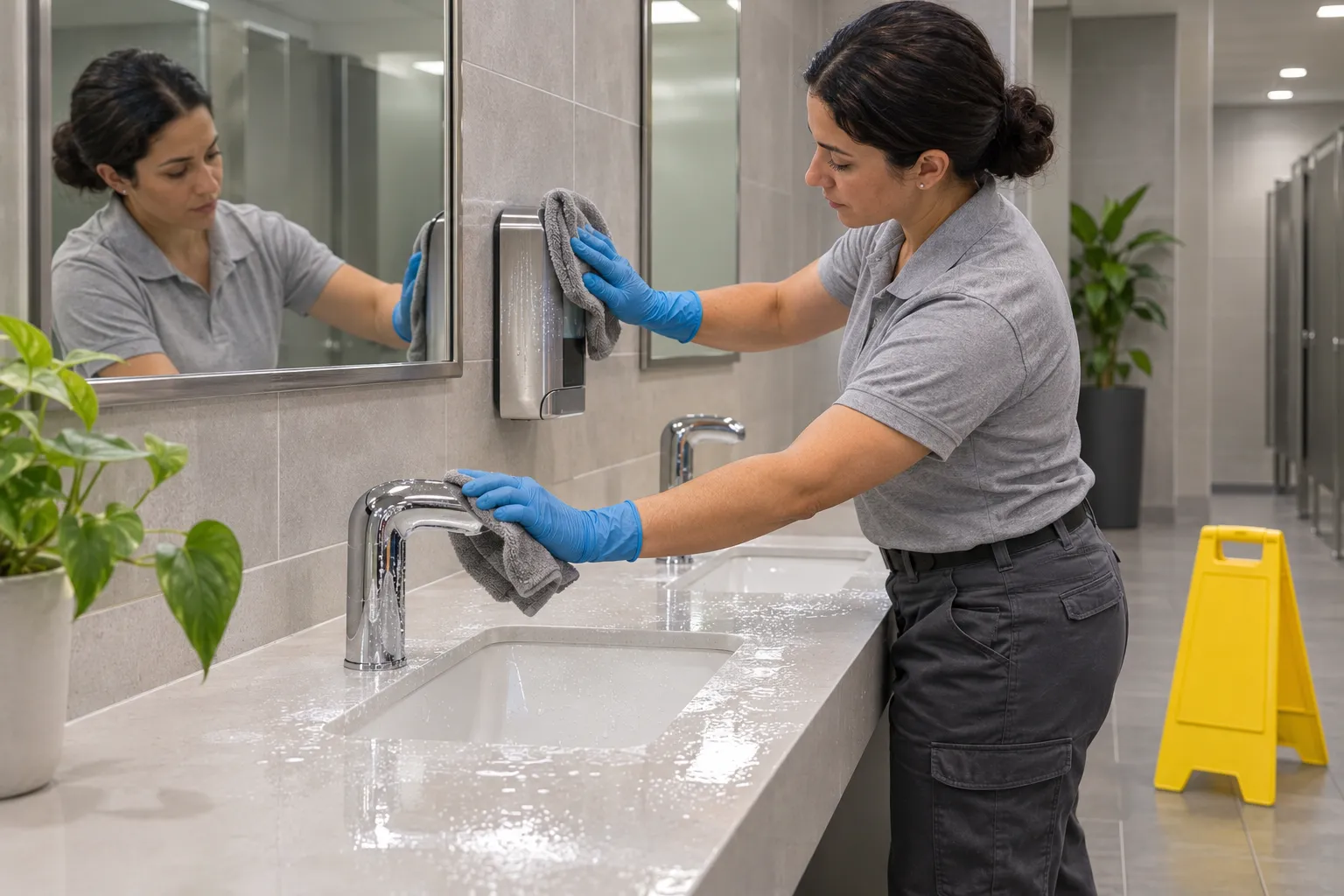
This is ground zero. Disinfect flush handles, toilet seats, stall locks, faucet handles, soap and towel dispensers, and both sides of the door handle every day in season, and more often during an outbreak. Our commercial restroom cleaning guide has a full daily and weekly checklist.
Break Rooms and Kitchens
Norovirus is also the leading cause of foodborne illness in the US, so shared food is a real risk. Disinfect the fridge, microwave, and coffee pot handles daily, keep serving utensils out of shared bowls, and ask anyone who has been sick to stay out of shared food prep for a while. The office break room cleaning checklist covers the full routine.
Shared Equipment
- Hot-desk keyboards, mice, and headsets
- Printer and copier control panels
- Conference room tables, chair arms, remotes, and phones
- Elevator buttons, door push plates, and stair railings
- Shared tablets, badge readers, and check-in kiosks
8. When Can a Sick Employee Come Back?
Most people with norovirus feel better within one to three days, but they stay contagious longer. The CDC advises people not to prepare food or care for others until at least two days after their symptoms stop, and its outbreak guidelines exclude sick food handlers and health care staff for 48 to 72 hours after symptoms end.
A Simple Office Policy That Works:
- Ask employees with vomiting or diarrhea to stay home, and to stay home for 48 hours after symptoms stop
- Offer remote work for that window when the job allows it, so people aren't tempted to come in early
- When someone returns, ask them to be extra careful with handwashing and to skip shared food prep for a while
- Tell your cleaning crew which areas to prioritize, not which person was sick. Location is all they need.
This is general guidance, not medical or legal advice. Follow your own HR policies, and check with the Massachusetts Department of Public Health or your local board of health if you run a food service, child care, or health care operation, where stricter rules apply.
9. Cleaning vs. Sanitizing vs. Disinfecting
These words get used interchangeably, but they mean different things, and the difference matters with norovirus. Here's how the CDC describes them:
- Cleaning removes dirt and germs from a surface with soap or detergent and water. It lowers the number of germs but doesn't necessarily kill them.
- Sanitizing reduces germs to a level public health standards consider safe. It's common on food-contact surfaces.
- Disinfecting uses chemicals to kill germs on surfaces. It's what you need when someone has been sick.
For norovirus, you need all three steps in the right order: clean first, then disinfect with a product that is labeled for norovirus. A sanitizer or a general-purpose disinfectant without a norovirus claim isn't enough.
Norovirus Response Plan at a Glance
| Situation | What to Do | Urgency |
|---|---|---|
| Normal day, November to April | Daily high-touch and restroom disinfection with a List G product | Routine |
| An employee calls out with a stomach bug | Disinfect their workstation and the restrooms and break room they used | Same day |
| Someone vomits or has diarrhea at work | Close the area and follow the full cleanup protocol | Immediately |
| Two or more cases close together | Outbreak mode: twice-daily disinfection, pause shared food | Immediately |
| Carpet or upholstery soiled | Remove, clean, then hot-water extraction or steam | Same day |
| Last sick employee has recovered | Full deep clean of restrooms, break room, and shared areas | Within a few days |
Norovirus Cleaning FAQs
How long does norovirus live on surfaces?
Long enough that you shouldn't wait it out. In a 2015 study, norovirus on stainless steel and plastic appeared to remain infective for weeks, and it lasted even longer at refrigerator temperatures. Clean and disinfect instead of assuming it will die off over a weekend.
Does bleach kill norovirus?
Yes, at the right strength. The CDC recommends 1,000 to 5,000 ppm (5 to 25 tablespoons of household bleach per gallon of water), left on the surface for at least 5 minutes after the surface has been cleaned.
Do disinfecting wipes kill norovirus?
Only wipes whose EPA registration number is on List G, and only if the surface stays wet for the full contact time on the label. Many common wipes don't carry a norovirus claim.
Does hand sanitizer work against norovirus?
Not well. The CDC says hand sanitizer isn't a substitute for washing with soap and water, which is the best way to get norovirus off your hands.
How long is someone with norovirus contagious?
People are most contagious while they're sick and in the first few days after, but the CDC says they can spread the virus for two weeks or more after they feel better. That's why handwashing matters even after everyone is back at their desks.
Don't Let One Stomach Bug Take Out the Whole Office
Norovirus is tough, but it isn't unbeatable. Use a disinfectant that is actually labeled for it, give it the full contact time, clean before you disinfect, wash hands with soap instead of relying on sanitizer, and have a plan ready before someone gets sick at work. Those habits, plus a cleaning schedule that steps up from November through April, are what keep one bad day from becoming a lost week.
If you're deciding how often your office needs professional cleaning this winter, our guide to how often an office should be cleaned breaks it down by office size and traffic, and the 2026 Boston commercial cleaning pricing guide shows what it typically costs.
Need Help Keeping Your Office Healthy This Winter?
Gentle Cleaners LLC is an insured commercial cleaning company with background-checked cleaners, serving offices throughout Greater Boston. Our crews follow CDC cleaning and disinfection guidelines, and we can step up high-touch and restroom disinfection through norovirus season with daily office cleaning, or schedule a one-time deep clean after a stomach bug moves through your office. Proudly serving Boston, Cambridge, Quincy, Brookline, Weymouth, and surrounding communities.
Call us at (781) 901-5590 or request a cleaning quote.
Ready for Professional Commercial Cleaning?
Let our expert commercial cleaning team handle the thorough janitorial work while you focus on growing your business in the Greater Boston Metropolitan Area.
Get Your Commercial Quote