Office Break Room & Kitchen Cleaning: The Complete Checklist for Boston Workplaces
Every office has one room that everybody uses and nobody owns: the break room. It's where the whole team touches the same faucet, the same microwave door, and the same coffee pot handle, often several times a day, and where a forgotten container of leftovers can quietly turn into a science project. Get the break room right and it's a place people actually want to take a break. Get it wrong and it becomes the source of complaints, smells, and the cold that works its way through your whole team. This guide gives you a complete office break room cleaning checklist (daily, weekly, and monthly), plus the kitchen rules and division of labor that keep it working for offices across the Greater Boston Area.
Timing matters here too. Late fall through early spring is cold and flu season in New England, and it lines up with the busiest stretch for shared food at work: holiday potlucks, catered lunches, and boxes of treats from clients. If your break room routine is going to slip, this is when it hurts most.
1. Why the Break Room Gets Dirty Faster Than Any Other Room
A private office gets used by one person. A conference room gets used a few times a day. The break room gets used by everyone, all day, and for the messiest thing people do at work: handling food and drink. That combination of heavy traffic, shared surfaces, moisture, and food residue is exactly what bacteria need.
There's also a responsibility problem. When everyone shares a space, everyone assumes someone else will wipe the counter, empty the overflowing trash, or deal with the mystery container in the fridge. Without a clear schedule and clear ownership, small messes stack up until the room needs a rescue rather than a routine.
Signs Your Break Room Routine Isn't Working:
- A sour or musty smell when you open the refrigerator or the cabinet under the sink
- Dried splatter on the inside of the microwave that nobody claims
- A sink that always has someone's dishes “soaking” in it
- A sponge that has been there longer than anyone can remember
- Sticky spots on the floor in front of the coffee maker and the fridge
- Trash and recycling bins that overflow by mid-afternoon
2. Break Room Germ Hotspots: What the Research Found
The most-cited research on office kitchens is a two-year study by Kimberly-Clark Professional with University of Arizona microbiologist Dr. Charles Gerba, who swabbed thousands of surfaces in office buildings. Break room handles came out on top. As reported by HealthDay, high levels of contamination were found on:
- 75% of break room sink faucet handles
- 48% of microwave door handles
- 27% of keyboards
- 26% of refrigerator door handles
Kimberly-Clark sells cleaning and hygiene products, so it's fair to read the study with that in mind. But the pattern matches common sense. The surfaces people touch right before and after handling food are the ones that need attention most often.
The Sponge Problem
The single dirtiest object in many office kitchens is the shared sponge. A 2017 study of used kitchen sponges by German researchers identified hundreds of bacterial species living in them, and found that sponges people regularly “sanitized” weren't meaningfully cleaner. A food safety expert quoted by WGBH suggested replacing sponges every one to two weeks. In an office, where a dozen people share one sponge, the better answer is usually to skip it: use a dishwasher, a dish brush that can go through the dishwasher, or disposable cloths.
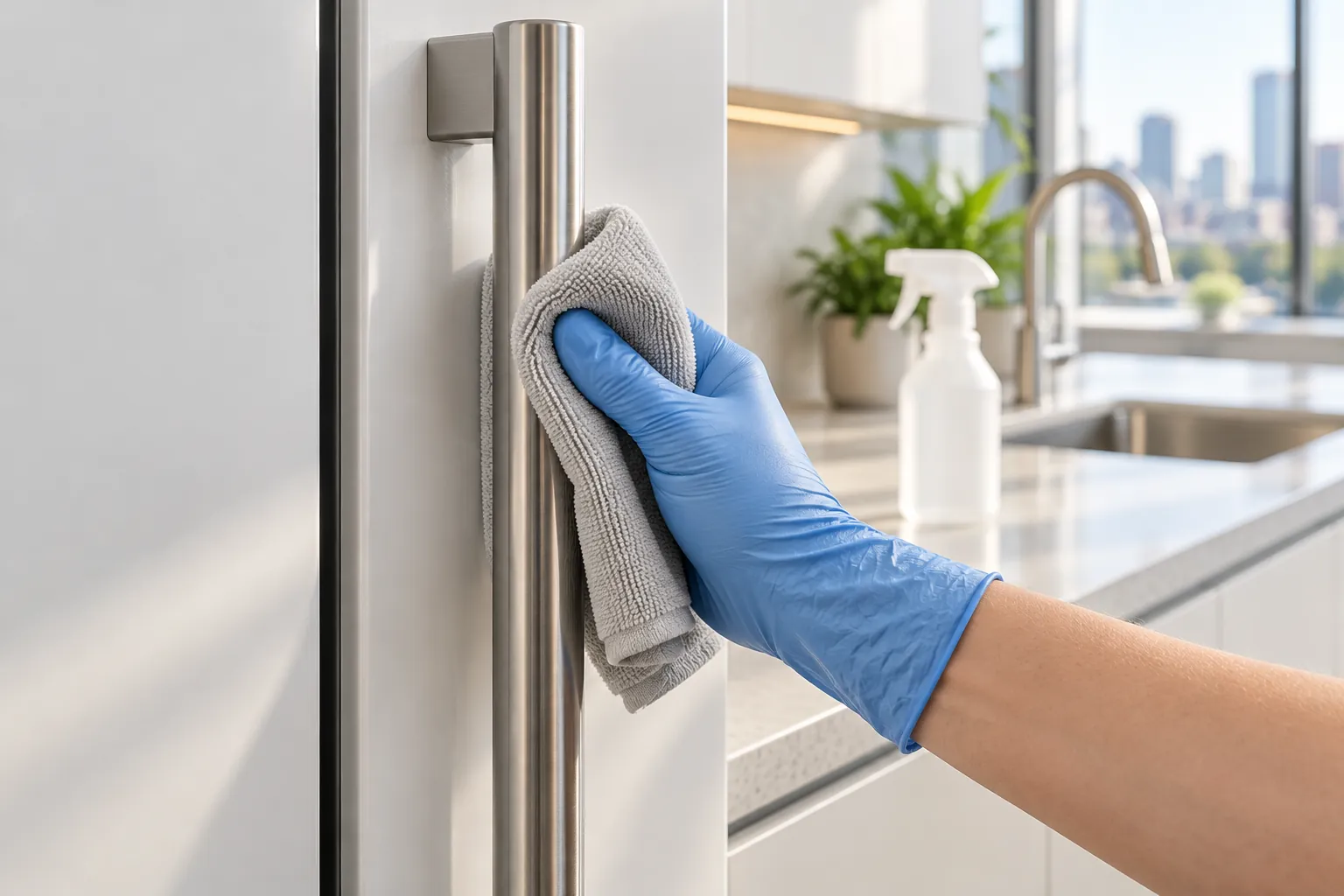
High-Touch Break Room Surfaces to Disinfect Daily:
- Sink faucet handles and the sink edge
- Microwave door handle, keypad, and start button
- Refrigerator and freezer door handles
- Coffee maker handle, buttons, and carafe handle
- Water cooler and ice dispenser buttons and levers
- Cabinet pulls, drawer handles, and the trash can lid
- Light switches, door push plates, and the paper towel dispenser
- Shared tables, chair backs, and countertops
The CDC's cleaning guidance comes down to two steps in order: clean first to remove dirt and residue, then disinfect high-touch surfaces. Disinfectants work poorly on surfaces that are still greasy or crumby, and they need to stay wet for the contact time on the label to actually work. A quick spray-and-wipe skips both.
3. The Daily Break Room Cleaning Checklist
These are the non-negotiables. In most offices they take a trained cleaner 20 to 30 minutes, longer for large or heavily used kitchens. Print this list and post it inside a cabinet door so nothing gets skipped.
Daily Break Room Checklist
- ☐ Clear and wipe all countertops, then disinfect them
- ☐ Disinfect every high-touch handle, button, and switch listed above
- ☐ Wipe tables and chair backs
- ☐ Clean and disinfect the sink basin, faucet, and drain area
- ☐ Wipe the microwave interior if there's fresh splatter
- ☐ Wipe appliance fronts (fridge, dishwasher, microwave, coffee maker)
- ☐ Run the dishwasher, or unload it if it ran overnight
- ☐ Empty trash, recycling, and any compost bins and replace the liners
- ☐ Restock paper towels, hand soap, and dish soap
- ☐ Sweep and damp-mop the floor, with extra attention in front of the sink, fridge, and coffee station
In Boston winters, add a quick check for salt and slush tracked in from outside. Break rooms near the entrance pick it up fast, and the white residue gets slippery when it mixes with spilled coffee. Our winter office cleaning checklist covers salt damage in more detail.
4. Weekly Tasks and the Friday Fridge Clean-Out
Weekly tasks go a layer deeper. They handle the build-up that daily wiping misses, and they keep the refrigerator from becoming the most avoided appliance in the building.
Weekly Break Room Checklist:
- Clear out the refrigerator (see the routine below) and wipe the shelves and door bins
- Steam-clean the microwave: heat a bowl of water with lemon or vinegar for a few minutes, then wipe the loosened residue
- Wipe cabinet fronts, drawer fronts, and the backsplash
- Clean the coffee maker's removable parts, drip tray, and water reservoir
- Wipe the water cooler drip tray and spigots
- Wash the inside and outside of trash and recycling bins
- Clean the toaster crumb tray, if you have one
- Scrub the floor along baseboards and under the edges of appliances
The Friday Fridge Clean-Out Routine
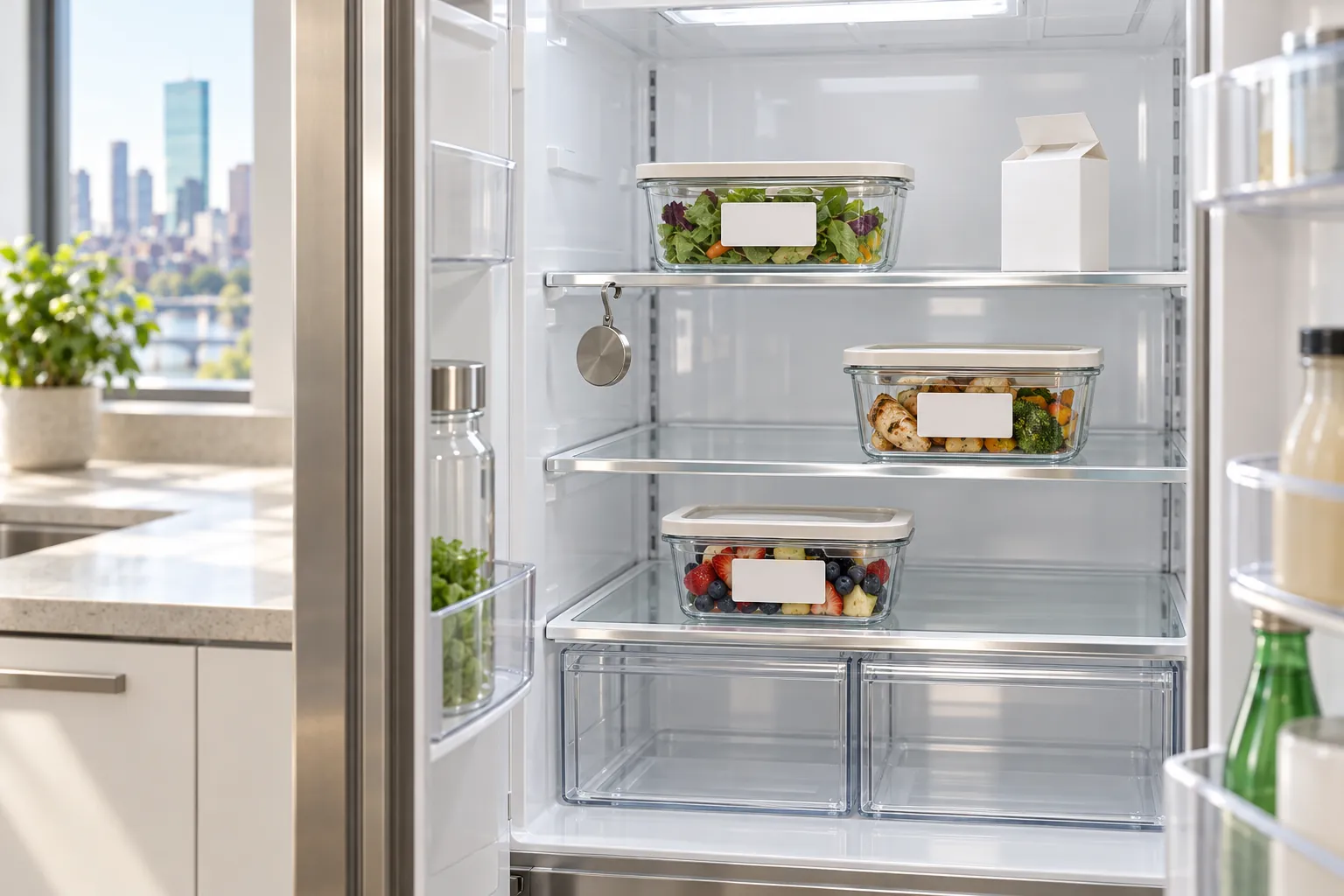
The shared fridge causes more break room friction than anything else. A fixed weekly routine, announced in advance, solves most of it:
- Announce it. Send a reminder Friday morning: anything unlabeled or past its date goes at 3 p.m.
- Empty it. Remove anything unlabeled, expired, or older than four days. FoodSafety.gov's storage chart puts most leftovers at three to four days in the fridge.
- Wipe it. Clean the shelves, drawers, and door bins with warm soapy water, then wipe dry.
- Check the temperature. The FDA recommends keeping refrigerators at or below 40°F. An inexpensive fridge thermometer makes this a five-second check.
- Deodorize. Leave an open box of baking soda on a back shelf and replace it every few months.
5. Monthly and Quarterly Deep Cleaning
Deep-cleaning tasks are easy to forget because nothing looks urgent. Put them on a calendar instead of waiting until someone complains.
Monthly:
- Descale the coffee maker, or follow the manufacturer's schedule if it differs
- Clean the dishwasher filter and wipe the door gasket
- Pull out and clean the freezer, discarding anything freezer-burned or unclaimed
- Wipe the inside of cabinets and drawers and check for crumbs or pest signs
- Degrease the range hood or the area around a toaster oven
- Deep-clean grout, floor corners, and the floor under movable appliances
Quarterly or Twice a Year:
- Sanitize the water cooler reservoir and the ice machine, following the manufacturer's instructions
- Pull the refrigerator out and vacuum the condenser coils
- Wash walls and light switch plates around the coffee and food prep areas
- Deep-clean upholstered break room seating
6. Coffee Station, Water Cooler, and Appliance Care
The coffee station is the busiest few square feet in most offices. It combines heat, moisture, sugar, and dozens of hands, which is why its surfaces get grimy fast and why the carafe handle so often turns up in germ studies.
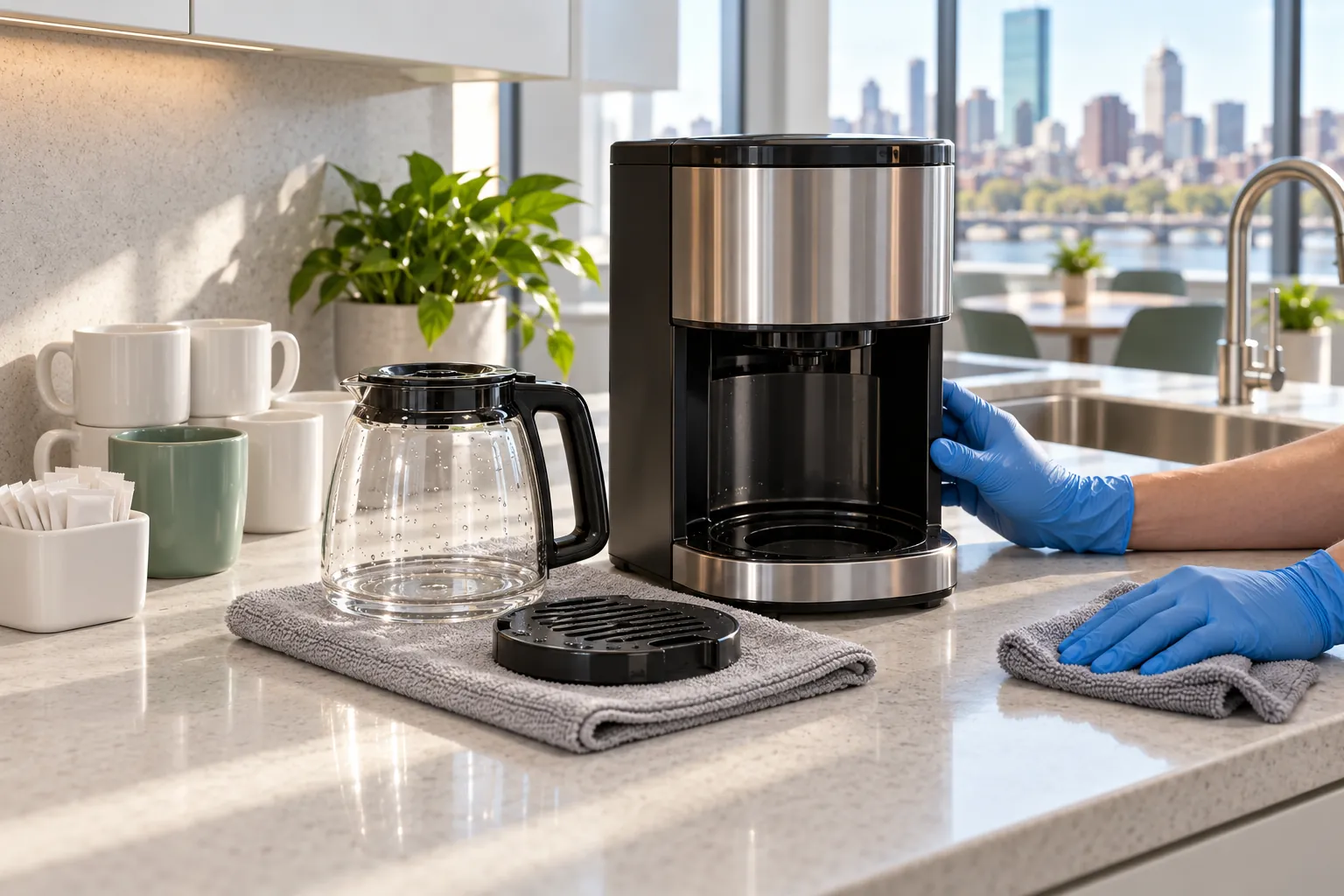
- Drip coffee makers: empty and rinse the carafe and basket every day. Wash removable parts weekly and descale monthly.
- Pod machines: empty the used-pod bin daily, since damp grounds grow mold quickly. Wipe the needle area and drip tray weekly, and run a descaling cycle when the machine prompts you.
- Water coolers: wipe the spigots and buttons daily, empty the drip tray weekly, and sanitize the reservoir when you change bottles or on the manufacturer's schedule.
- Microwaves: post a “cover your food” sign and keep a stack of microwave covers nearby. It prevents most of the splatter in the first place.
- Dishwashers: the most hygienic way to handle shared dishes. Encourage staff to load it instead of leaving dishes in the sink.
7. Office Kitchen Rules Your Team Will Actually Follow
A cleaning crew can reset the break room every night, but they can't stop a coworker from leaving a pan of oatmeal in the sink at 10 a.m. Short, specific rules posted where people will see them fill that gap. Keep the list short. Ten rules get ignored and five get followed.
Sample Break Room Rules (Copy, Edit, and Post)
- Label and date everything you put in the fridge.
- The fridge is emptied every Friday at 3 p.m. Unlabeled or expired food goes.
- Cover food in the microwave and wipe up any splatter right away.
- Load your dishes in the dishwasher, or wash and put them away. No “soaking.”
- Wipe up your own spills, and report big ones so they get cleaned properly.
- If you take the last cup of coffee, start a new pot.
Rules work best when someone visibly owns them. Rotate a weekly “kitchen captain” who sends the Friday reminder and does the fridge clean-out, and the room stops being everyone's problem and no one's job.
8. Food Waste, Recycling, and Massachusetts Rules
Trash is where break room smells usually start, and Massachusetts has rules worth knowing about. Under MassDEP's commercial food material disposal ban, businesses and institutions that generate a half ton or more of food waste per week have been barred from throwing it out with regular trash since November 1, 2022. They have to donate, compost, or otherwise divert it.
A typical office break room produces far less than that. But buildings with cafeterias, catered events, or several tenants sharing one waste stream can get closer than you'd expect, so it's worth asking your property manager or hauler. Even when the ban doesn't apply, separating food scraps into a lidded bin that gets emptied daily cuts odor and fruit flies noticeably.
Trash and Recycling Tips:
- Use lidded bins, ideally foot-pedal operated so nobody has to touch the lid
- Empty food waste daily, even if the bin isn't full
- Label recycling clearly with pictures of what goes in. Contaminated recycling often gets thrown out as trash anyway.
- Rinse and wash the bins themselves weekly. Residue at the bottom of the can is a common source of lingering smells.
9. Who Cleans What: Staff vs. Professional Crew
The cleanest break rooms split the work clearly. Staff handle their own food and dishes as they go, and a professional crew handles the disinfection, floors, trash, and deep cleaning that nobody has time to do properly during the workday.
| Staff (Throughout the Day) | Professional Crew (Scheduled) |
|---|---|
| Wash or load their own dishes | Disinfect all high-touch surfaces |
| Wipe their own spills and microwave splatter | Clean and disinfect sinks and countertops |
| Label, date, and remove their own food | Sweep and mop floors and edges |
| Start a new pot when they finish the coffee | Empty trash, recycling, and compost, and wash the bins |
| Report big spills or broken appliances | Appliance exteriors, microwave interior, and deep-cleaning tasks |
Break room and kitchen cleaning is part of our daily office cleaning and weekly janitorial service programs, so the room gets a full reset on a schedule that matches how heavily your team uses it. If you're still deciding how often you need service, our guide to how often an office should be cleaned breaks it down by office size and industry.
Break Room Cleaning Schedule at a Glance
Use this table as your master schedule. Frequencies assume a typical office of 10 to 50 people. Increase them for larger teams or kitchens that also serve clients.
| Task | Frequency | Priority |
|---|---|---|
| Disinfect handles, buttons & switches | Daily (2x in flu season) | Critical |
| Countertops, tables & sink | Daily | Critical |
| Trash, recycling & food waste | Daily | Critical |
| Floors swept & mopped | Daily | High |
| Restock soap & paper towels | Daily | High |
| Refrigerator clean-out | Weekly (Friday) | High |
| Microwave steam-clean | Weekly | High |
| Coffee maker parts & drip trays | Weekly | Medium |
| Descale coffee maker, clean dishwasher filter | Monthly | Medium |
| Freezer, cabinet interiors & grout | Monthly | Medium |
| Water cooler, ice machine & fridge coils | Quarterly / per manufacturer | Medium |
A Break Room Your Team Actually Wants to Use
A clean break room is a small thing that people notice every day. It tells your team the company cares about the space they share, it cuts down on the germs that spread through a crowded office each winter, and it keeps the fridge from turning into a running office joke. A daily routine, a weekly fridge clean-out, a short list of rules, and a clear split between what staff and your cleaning crew handle are all it takes.
For the rest of the workspace, see our commercial restroom cleaning guide, the signs your office needs professional cleaning, and our 2026 Boston commercial cleaning pricing guide.
Want the Break Room Handled for You?
Gentle Cleaners LLC is an insured commercial cleaning company with background-checked cleaners, serving offices throughout Greater Boston. Break room and kitchen cleaning is built into our commercial cleaning services, from high-touch disinfection and floors to trash and appliance care, on a schedule that fits your office. Proudly serving Boston, Cambridge, Quincy, Brookline, Weymouth, and surrounding communities.
Call us at (781) 901-5590 or request a cleaning quote.
Ready for Professional Commercial Cleaning?
Let our expert commercial cleaning team handle the thorough janitorial work while you focus on growing your business in the Greater Boston Metropolitan Area.
Get Your Commercial Quote